
How to Search Montgomery County Court Records
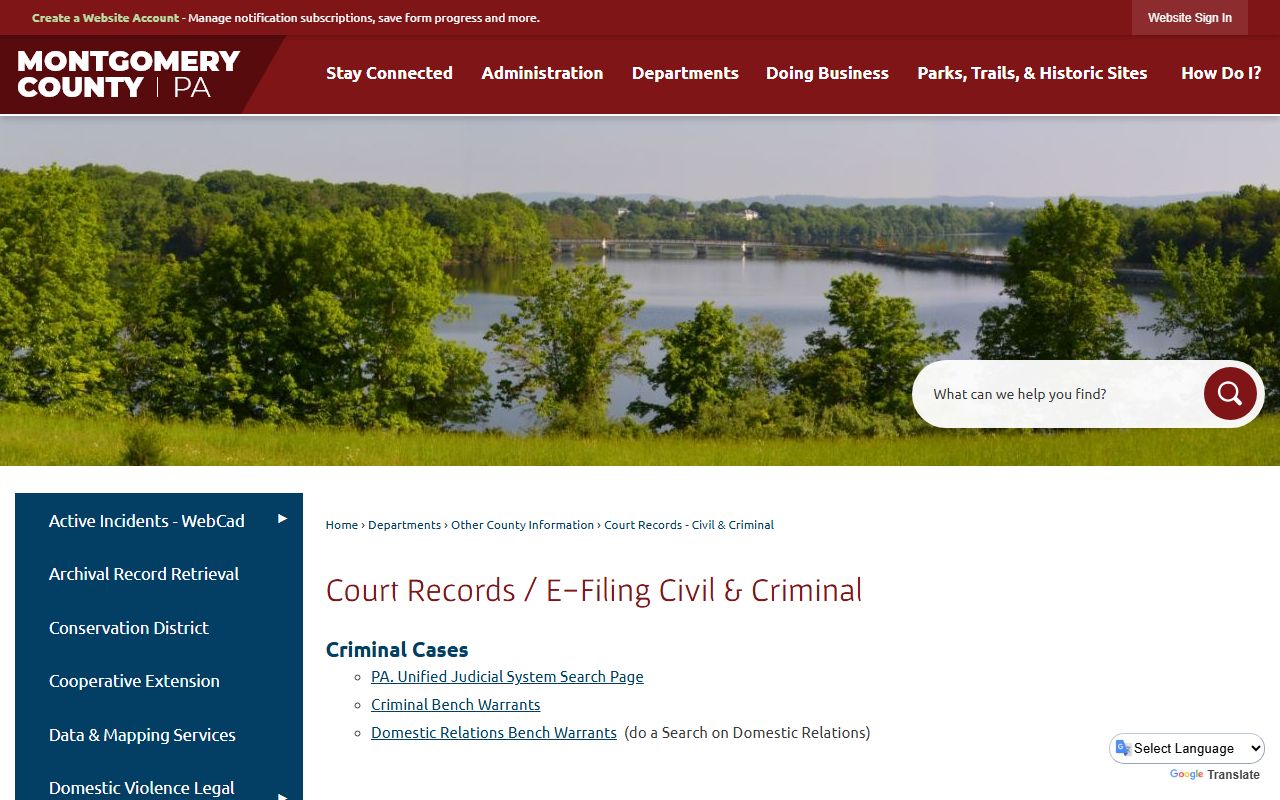
Most Montgomery County court records start with one free tool: the Pennsylvania Unified Judicial System (UJS) web portal. The UJS Case Search covers appellate cases, Common Pleas criminal cases, and Magisterial District Court civil, criminal, traffic, non-traffic, and landlord-tenant dockets. You do not need a login to read a public docket sheet. The county's own court records and e-filing page gathers the local links in one place, including civil case search, calendars, and bench warrants.
Before you start, gather what you know. A name works, but a docket number, citation number, or OTN works better. Montgomery County Common Pleas criminal dockets use the county code 46, so they read CP-46-CR. District court dockets begin with MJ and a district number that starts with 38.
- Open the UJS web portal and choose Case Search.
- Pick a Search By type, such as Participant Name, Docket Number, or Citation Number.
- For a name search, set County to Montgomery so you avoid statewide name matches.
- Open the docket sheet result and read the case events and parties.
- Need a certified copy? Request it from the office that holds the record, not from the portal.
The county links the local Civil Viewer for Court of Common Pleas civil cases. Docket entries there are free. Actual pleadings cost a small pay-per-page fee, and you get only one view per fee, so save or print the page when it opens. The county court records and e-filing hub ties these tools together.
The hub below is a good first stop because it lists the civil, criminal, marriage, probate, and bench-warrant searches side by side. Lean on it whenever you are not sure which office handles a record.
The UJS Case Search itself uses a single Search By menu that changes the rest of the form. The screenshot below shows that menu and the advanced fields it opens.
The portal's search form is summarized in the field table that follows, taken from the official UJS Case Search page.
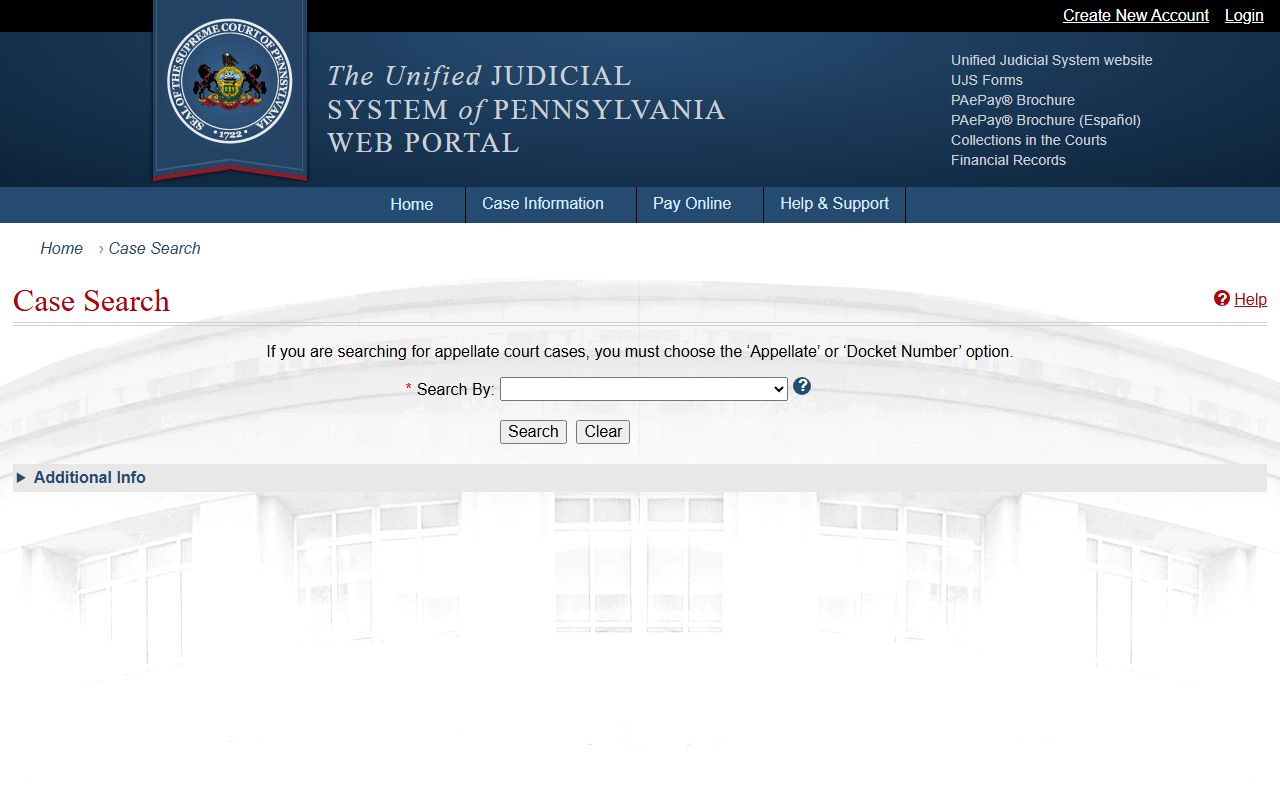
That single search page is how most residents reach a Montgomery County court record without leaving home.
| Field | Type | Required | Notes |
|---|---|---|---|
| Search By | Dropdown | Yes | Choices include Participant Name, Docket Number, Citation Number, OTN, Organization, Date Filed. |
| Docket Number | Text | If selected | Common Pleas uses CP-46-CR format; district courts use MJ with a 38 district number. |
| Citation Number | Text | If selected | Enter the unique format with a dash, such as A5368532-1. |
| County | Dropdown | For name searches | Pick Montgomery to limit statewide false matches. |
| Date Filed | Date range | For date searches | Start and end dates in mm/dd/yyyy. |
| Scheduled Events Only | Checkbox | No | Limits results to cases with a future hearing or event. |
Note: UJS warns that recent filings may not show right away and that docket sheets are not a substitute for a state background check.
The Montgomery County Judicial System
Pennsylvania runs a unified court system, and Montgomery County fits inside it as the 38th Judicial District. The trial court of general jurisdiction is the Court of Common Pleas. It has five divisions: Civil, Criminal, Family, Juvenile, and Orphans' Court. The first stop for many smaller matters is the Magisterial District Court level, where 29 local offices handle traffic, summary criminal, landlord-tenant, and small civil claims.
Appeals move up from there. Most appeals from Common Pleas go to the Superior Court of Pennsylvania. Cases that involve state government or agencies often go to the Commonwealth Court. The Supreme Court of Pennsylvania is the court of last resort. Court Administration for the county is led by Michael Kehs at P.O. Box 311, Norristown, and can be reached at 610-278-3224.
Case flow: Magisterial District Court › Court of Common Pleas › Superior Court (or Commonwealth Court) › Supreme Court of Pennsylvania
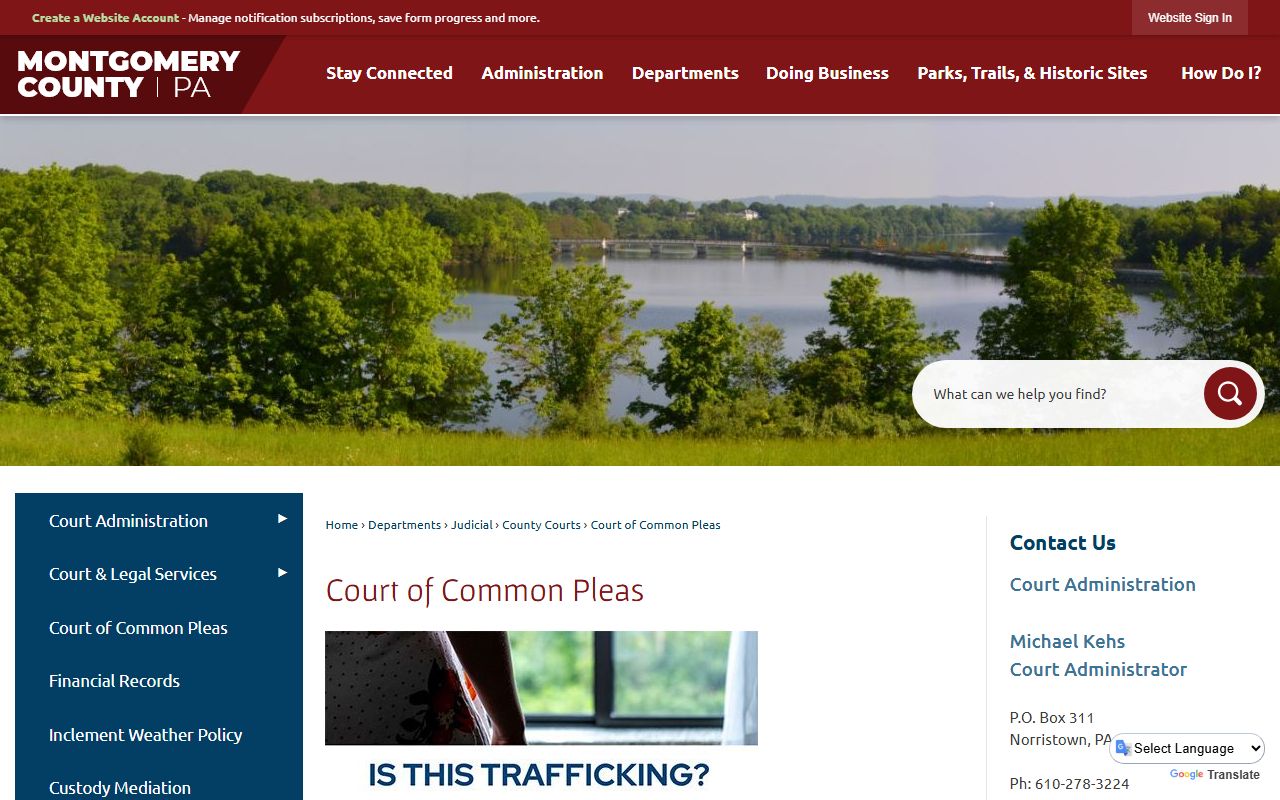
The official Court of Common Pleas page lists the five divisions and the Court Administration contact, shown below.
That structure decides where a record lives, which is why the table below pairs each court with what it hears.
| Court | Jurisdiction | Case Types |
|---|---|---|
| Supreme Court of Pennsylvania | Statewide, last resort | Final appeals, select review |
| Superior Court | Statewide appeals | Most criminal and civil appeals from Common Pleas |
| Commonwealth Court | Statewide | Government, agency, election, and public-sector matters |
| Court of Common Pleas (38th District) | Countywide trial court | Criminal, civil, family, juvenile, Orphans' Court |
| Magisterial District Courts | Local, 29 offices | Traffic, summary criminal, landlord-tenant, civil up to $12,000 |
Magisterial District Courts Near You
Montgomery County is one of the larger counties in the state, and court access is spread out on purpose. The county runs 29 Magisterial District Courts in towns like Norristown, Pottstown, Lansdale, Ambler, Jenkintown, Narberth, Collegeville, Limerick, Harleysville, and Red Hill. These courts handle the cases people meet most often. That means traffic tickets, summary offenses, landlord-tenant disputes, and civil claims where the damages do not pass $12,000.
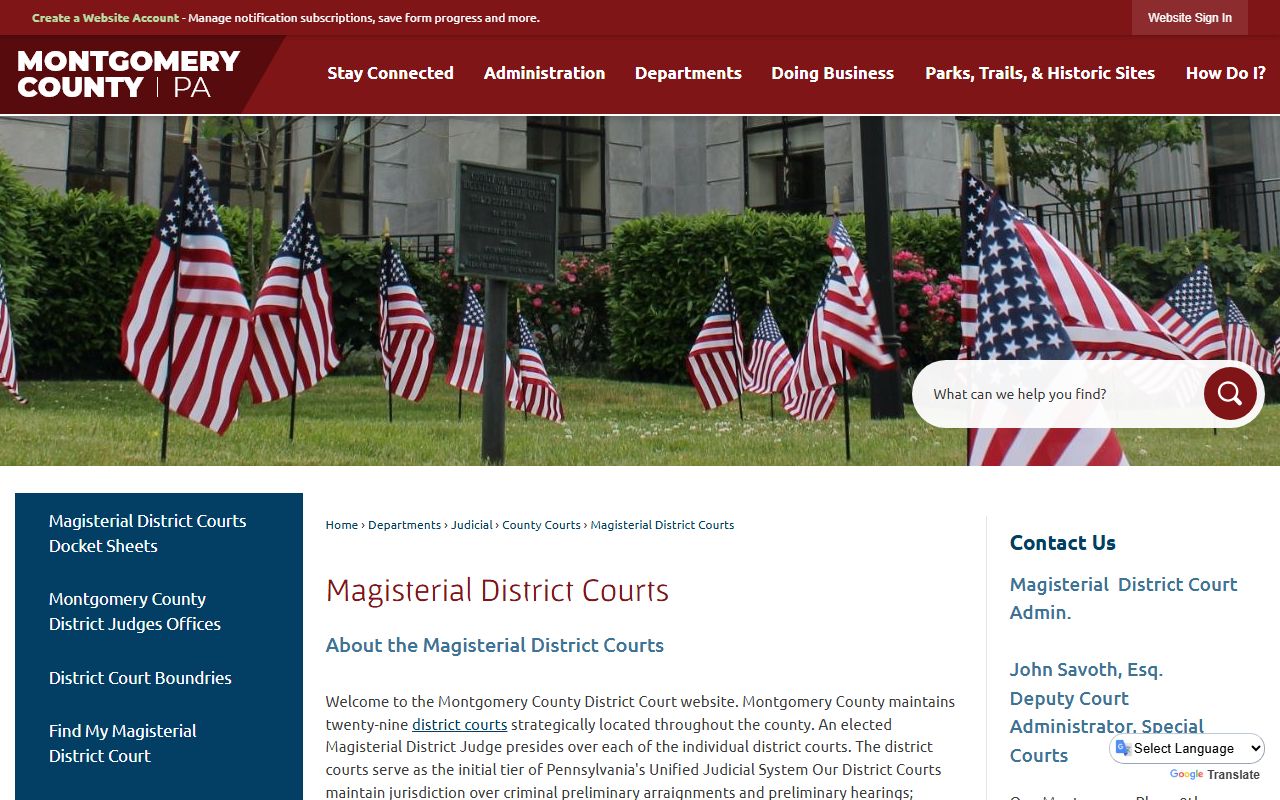
District courts also start the criminal process. Preliminary arraignments and preliminary hearings happen here before a serious case moves up to the Court of Common Pleas. The official Magisterial District Courts page explains this jurisdiction, and a separate county list gives each judge, address, phone, and the towns each office covers.
Because the right office depends on where the ticket or claim started, the comparison below shows how the two trial levels differ.
| Feature | Magisterial District Court | Court of Common Pleas |
|---|---|---|
| Civil limit | Claims up to $12,000 | No fixed dollar cap |
| Criminal role | Summary cases, preliminary hearings | Misdemeanors and felonies, trials |
| Records office | The local district court office | Prothonotary (civil), Clerk of Courts (criminal) |
| Docket prefix | MJ with a 38 district number | CP-46 |
The full office list and the map of all 29 courts sit on the Montgomery County Court of Common Pleas page.
Types of Court Records Available in Montgomery County
Court records in Montgomery County are split by subject, and each subject has its own keeper. The Prothonotary is the elected civil clerk. The Clerk of Courts keeps criminal records. The Register of Wills and Clerk of Orphans' Court holds estate and marriage records. Knowing this split is the single biggest time-saver for a records search.
The Prothonotary records a wide range of civil filings. The official Prothonotary page lists the categories the office handles.
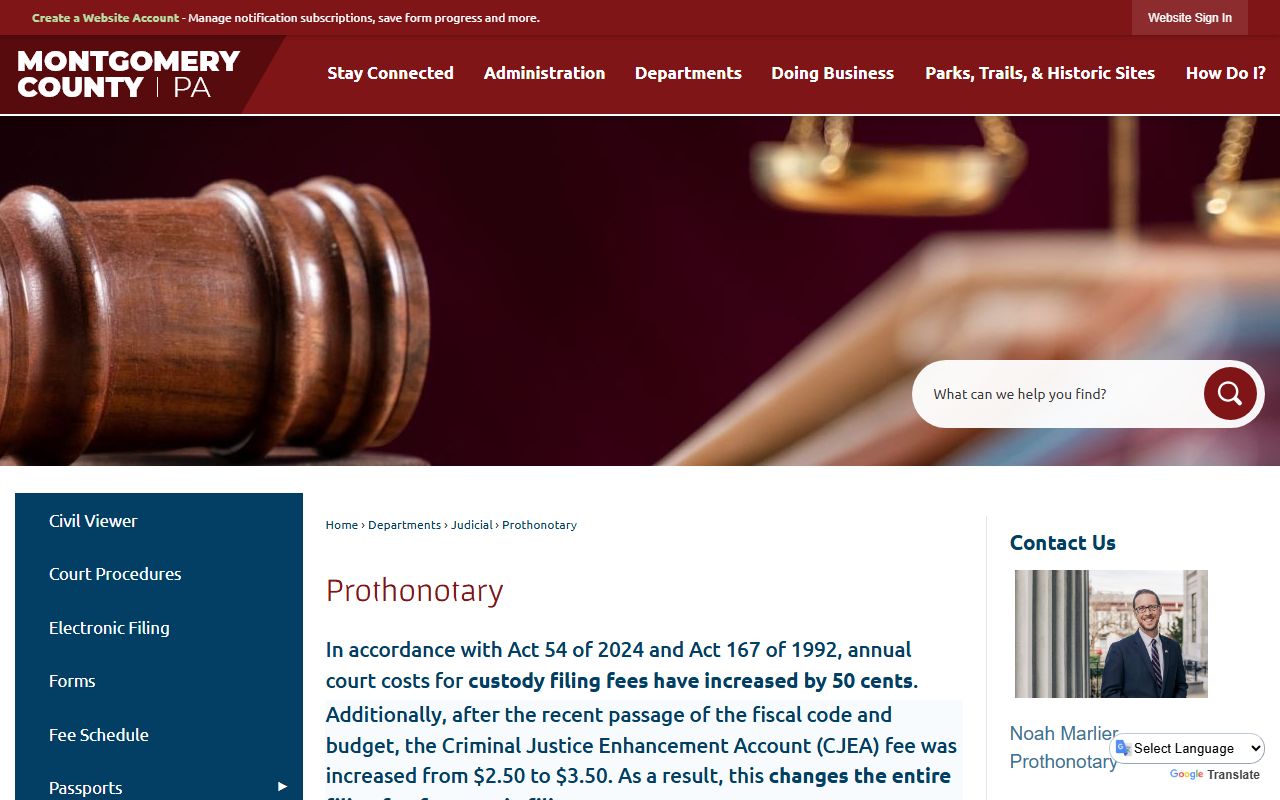
- Criminal records - kept by the Clerk of Courts; public docket sheets show on UJS.
- Civil records - personal injury, judgments, liens, name changes, and more at the Prothonotary.
- Family and divorce records - divorce, custody, and PFA filings run through the Prothonotary.
- Probate records - wills, estates, and guardianships at the Register of Wills.
- Traffic records - handled by the Magisterial District Courts.
Criminal cases follow a different path. The Clerk of Courts, led by Lori Schreiber, keeps the official criminal case records for the Court of Common Pleas, as the page below shows.
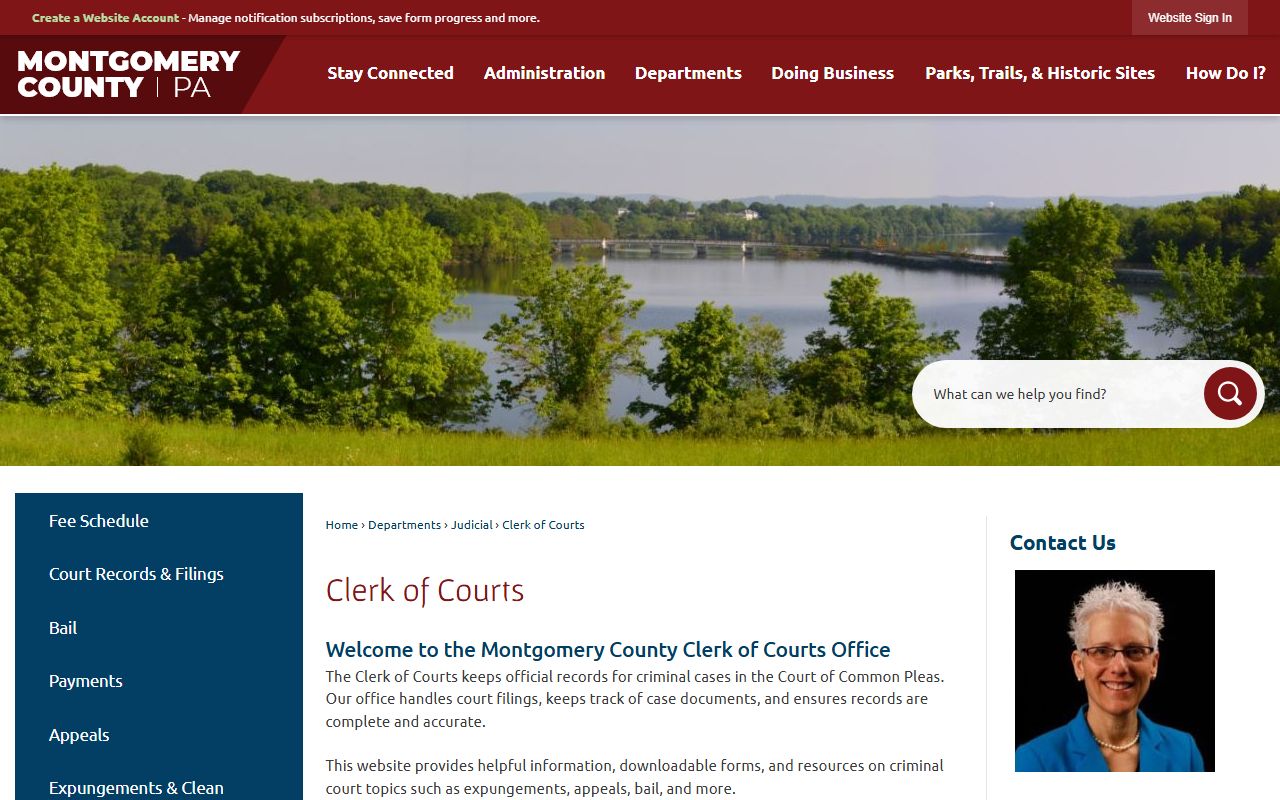
For a deeper look at any one of these, the court records page walks through each search tool in detail.
What Montgomery County Court Records Show
A docket sheet is the public summary of a case. It is not the full file, but it tells you who is involved, what happened, and when. Court records here follow the statewide format, so a Common Pleas criminal docket and a district court traffic docket share many of the same fields. The table below lists the parts you will usually see.
| Field | What It Shows |
|---|---|
| Docket Number | The case ID; CP-46 for Common Pleas, MJ for district court. |
| Court / District | Court of Common Pleas of Montgomery County or a named district court. |
| Parties | Plaintiff, defendant, petitioner, respondent, or the Commonwealth. |
| Charges / Cause | The offense or the civil claim that started the case. |
| Docket Entries | Filings, hearings, orders, continuances, and payments in date order. |
| Disposition | The outcome of each charge or the final judgment. |
Some fields stay hidden by law. Social Security numbers, financial account numbers, driver license numbers, and most minors' details are kept out of public filings. Sealed and limited-access cases may not appear at all.
Public Access Laws for Montgomery County Court Records
Pennsylvania treats court case records and ordinary agency records under different rules. Most county and state agency records fall under the Right-to-Know Law. Court case records instead follow the Unified Judicial System's Case Records Public Access Policy. Criminal history has its own statute. The result is simple in practice: case dockets are open to the public, but each record type has limits, and a docket is not a background check.
Key Statutes:
Pennsylvania Right-to-Know Law, 65 P.S. §§ 67.101-67.3104 - sets access rights to public records of state and local agencies and an appeal path through the Office of Open Records.
204 Pa. Code § 213.81 - the Case Records Public Access Policy; court case records are open unless a rule or order restricts them.
18 Pa.C.S. Chapter 91 - the Criminal History Record Information Act, which governs how criminal history is shared and corrected.
The same chapter holds the expungement rules at 18 Pa.C.S. § 9122 and the Clean Slate limited-access rules at 18 Pa.C.S. § 9122.2. More detail sits on the public records page.
Records That Are Restricted or Confidential
Not every case is public. UJS will hide some results even when you type the right name. Juvenile cases, expunged cases, and limited-access cases under Clean Slate do not show in public search results. Civil Common Pleas cases may not appear either, which is why the county points civil searches to the Prothonotary's Civil Viewer.
Other categories are sealed by court rule. These include adoption files, pre-sentence reports, sealed verdicts, juror notes, the names of minor abuse victims, and protected addresses in protection-from-abuse cases. If you believe a sealed record should be opened, that takes a motion filed with the court that holds the case. Absence from an online search does not prove a case never existed.
Specialty Courts in Montgomery County
Montgomery County runs several treatment and diversion courts. These programs are voluntary, and they aim at the cause of repeat contact with the system rather than just the charge. Behavioral Health Court began in 2009 for adults with a serious mental illness that played a role in the arrest. The contact is attorney Carol Sweeney at 610-278-3308.
Veterans Treatment Court started in April 2011 for veterans eligible for VA benefits who face TBI, PTSD, military sexual trauma, or substance issues. Patricia Cassidy is the contact at 610-278-3296. The county's Drug Treatment Court, led by Judge Steven T. O'Neill, earned Pennsylvania Supreme Court certification in March 2026 under a statewide standard for treatment courts. More on these programs is on the Court of Common Pleas page.
Montgomery County Sheriff and Jail
Sheriff Sean Kilkenny leads the Montgomery County Sheriff's Office from the courthouse on Airy Street. The office's Warrants Division processes hundreds of warrants a month and arrests thousands of offenders a year. The county posts an active bench warrant table on the Active Bench Warrants page, which you can search by name, town, or docket number.
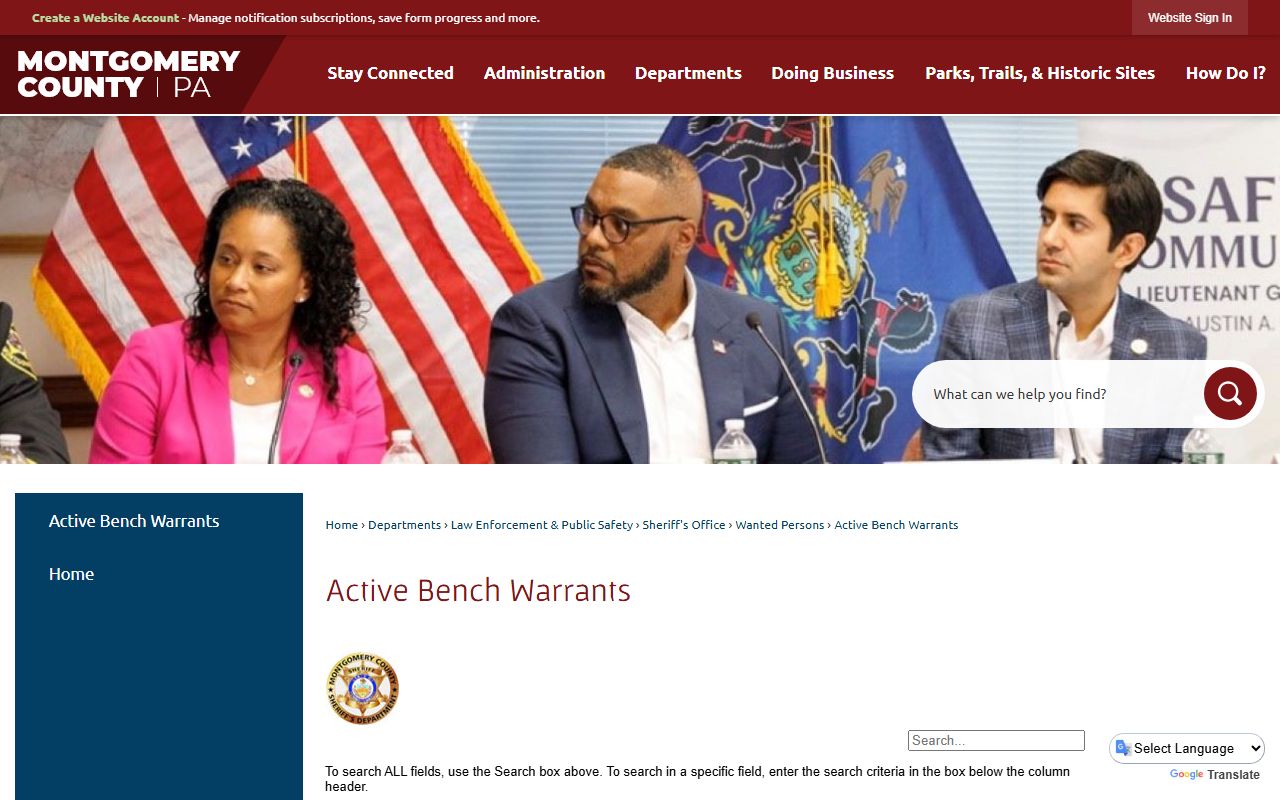
Jail custody is separate from court records. The Montgomery County Correctional Facility sits at 60 Eagleville Road in Eagleville and holds both sentenced and pretrial inmates under Warden Sean P. McGee.
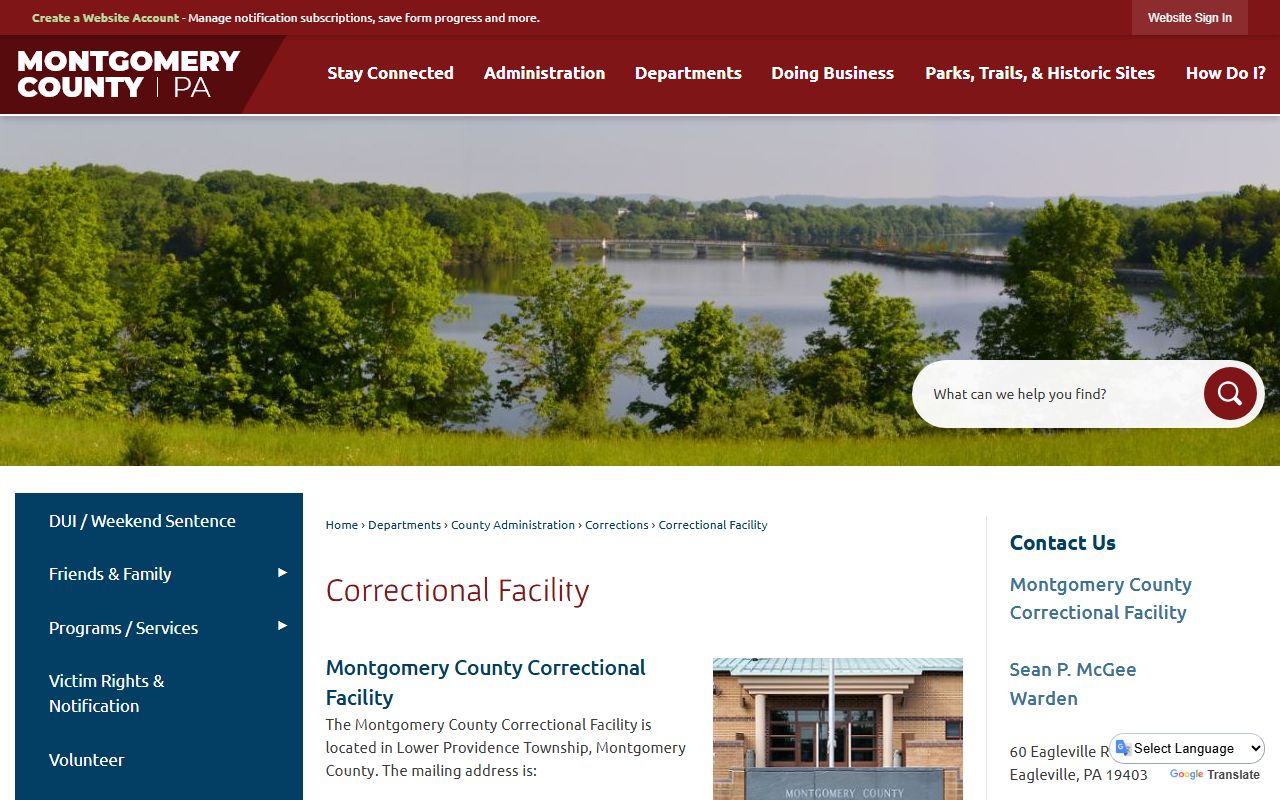
For the full roster guidance and search tools, see Montgomery County inmate records, and for outstanding warrants see the warrant records page.
Marriage, Divorce, and Orphans' Court Records
Marriage and probate records both run through one office, but divorce does not. The Register of Wills and Clerk of Orphans' Court, Tina Lawson, issues marriage licenses and probates wills. Divorce, though, is a civil matter at the Prothonotary. A good rule to remember: marriage records are with the Clerk of Orphans' Court, and divorce records are with the Prothonotary.
The Register of Wills page covers probate, marriage licenses, and Orphans' Court dockets in one place.
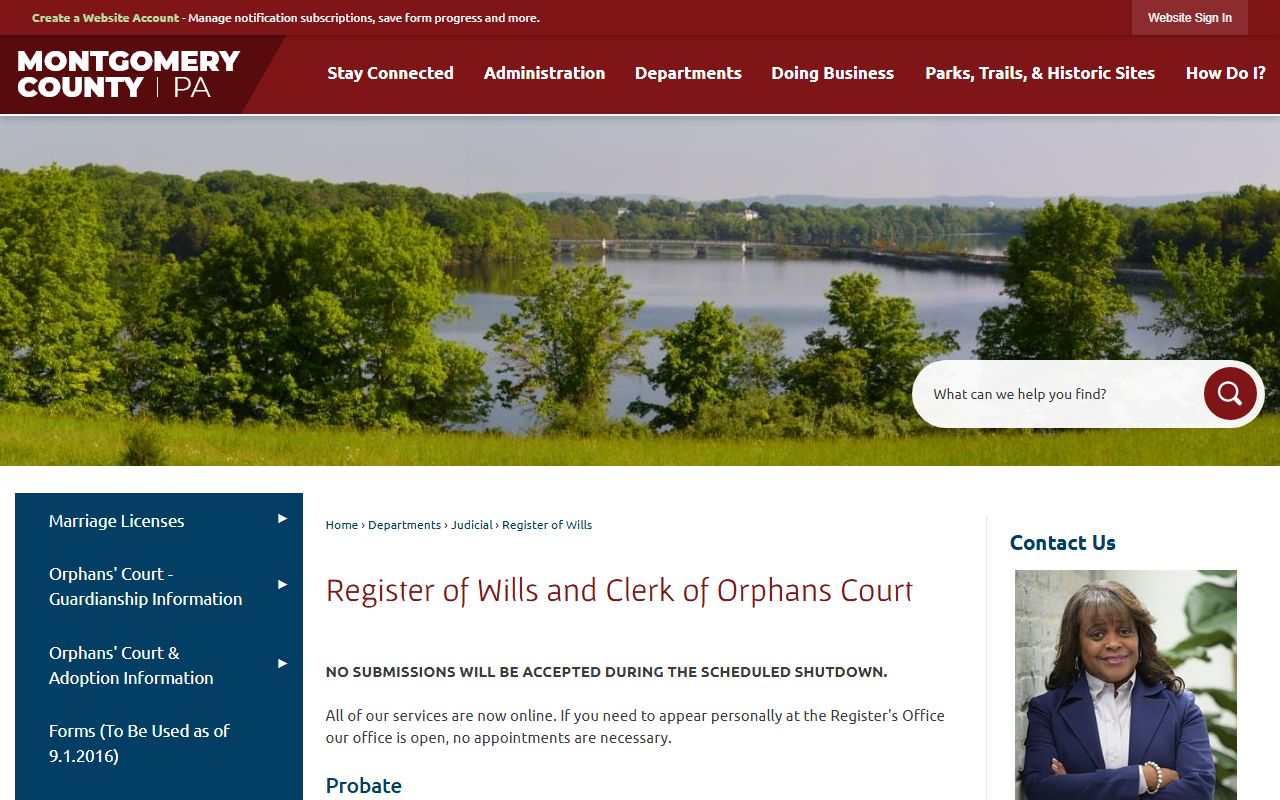
Estate matters come with their own terms. The short list below explains a few you will meet when you read Orphans' Court records or apply for marriage and divorce records.
- Testator
- A person who makes a will.
- Executor
- The person named in a will to settle the estate.
- Intestate
- Dying without a valid will, so state law sets the heirs.
- Short certificate
- A Register of Wills paper proving who may act for an estate.
Montgomery County Court Records Fees
Fees depend on the office and the type of copy. A free docket view is not the same as a certified copy, and a court certification fee is not the same as a Right-to-Know copy fee. The table below pulls the main published costs together so you can plan before you file or request.
| Item | Amount |
|---|---|
| Marriage license | $85.00 |
| Certified marriage copy (one seal) | $25.00 |
| Marriage application and certificate (two seal) | $50.00 |
| Civil Viewer pleading view | $0.50 first page, $0.10 each added page |
| Expungement filing | $176.50, plus $13.50 per extra agency served |
| Right-to-Know copy (black and white) | Up to $0.25 per page |
Note: the Prothonotary adds a Govolution processing fee of 2.60% for card payments and $2 for ACH, and personal checks are not accepted.
How to Interpret Montgomery County Court Records
A docket can look like code at first. The docket number is the key. A number that starts with CP-46-CR is a Common Pleas criminal case in Montgomery County. A number that starts with MJ and a 38 district code is a Magisterial District Court case. The OTN, or Offense Tracking Number, ties charges to a person across the system.
Watch the difference between a charge and a conviction. A charge is what the case began with. The disposition is what the court decided. A case can show several charges with different outcomes, such as guilty, not guilty, withdrawn, or dismissed. Reading the disposition line, not the charge line, tells you what really happened.
Self-Help and Legal Aid in Montgomery County
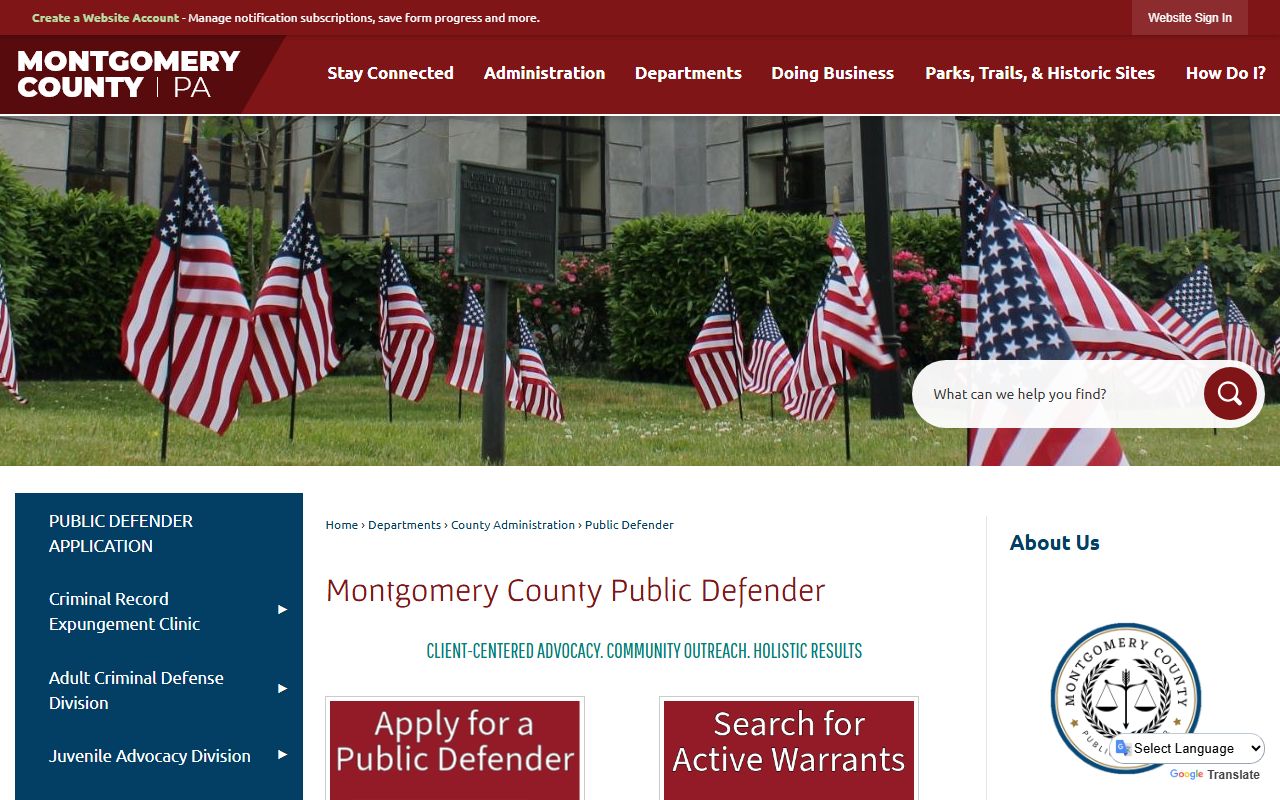
Court records help, but sometimes you need a person. The Montgomery County Public Defender represents adults and juveniles in criminal matters and runs an expungement clinic for its clients. For civil problems, the picture is different, because the Public Defender does not take divorce, eviction, or benefits cases.
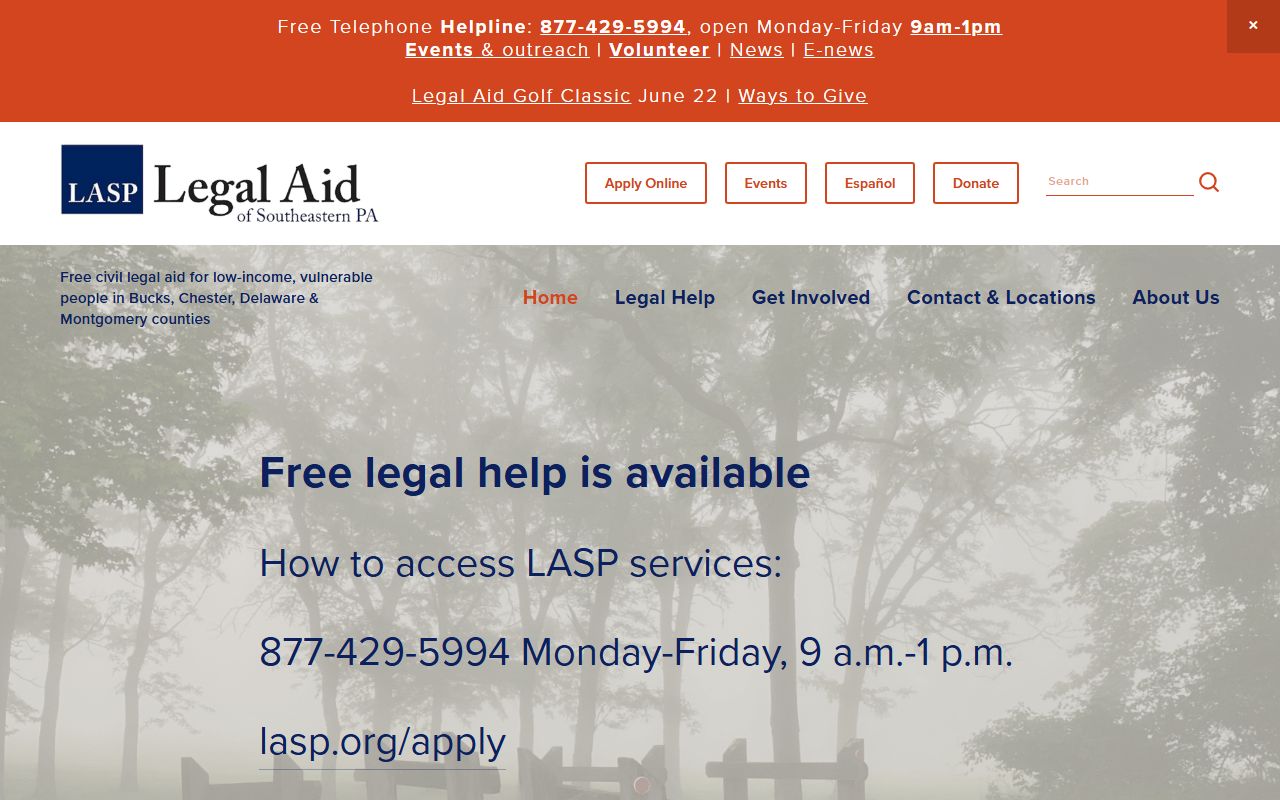
For civil legal aid, Legal Aid of Southeastern Pennsylvania serves low-income residents of Montgomery and nearby counties through a helpline at 877-429-5994.
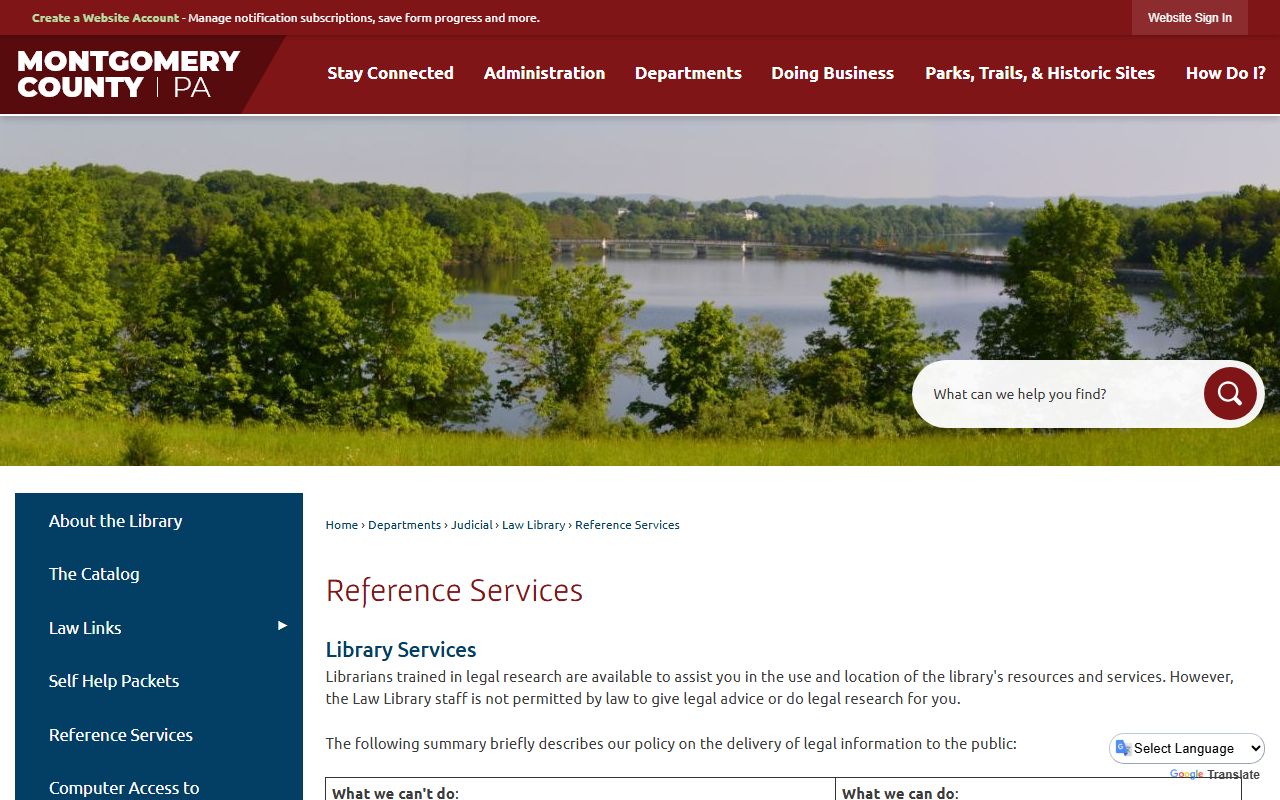
The Montgomery County Law Library can point you to legal materials and forms, though staff cannot give legal advice or pick a form for you.
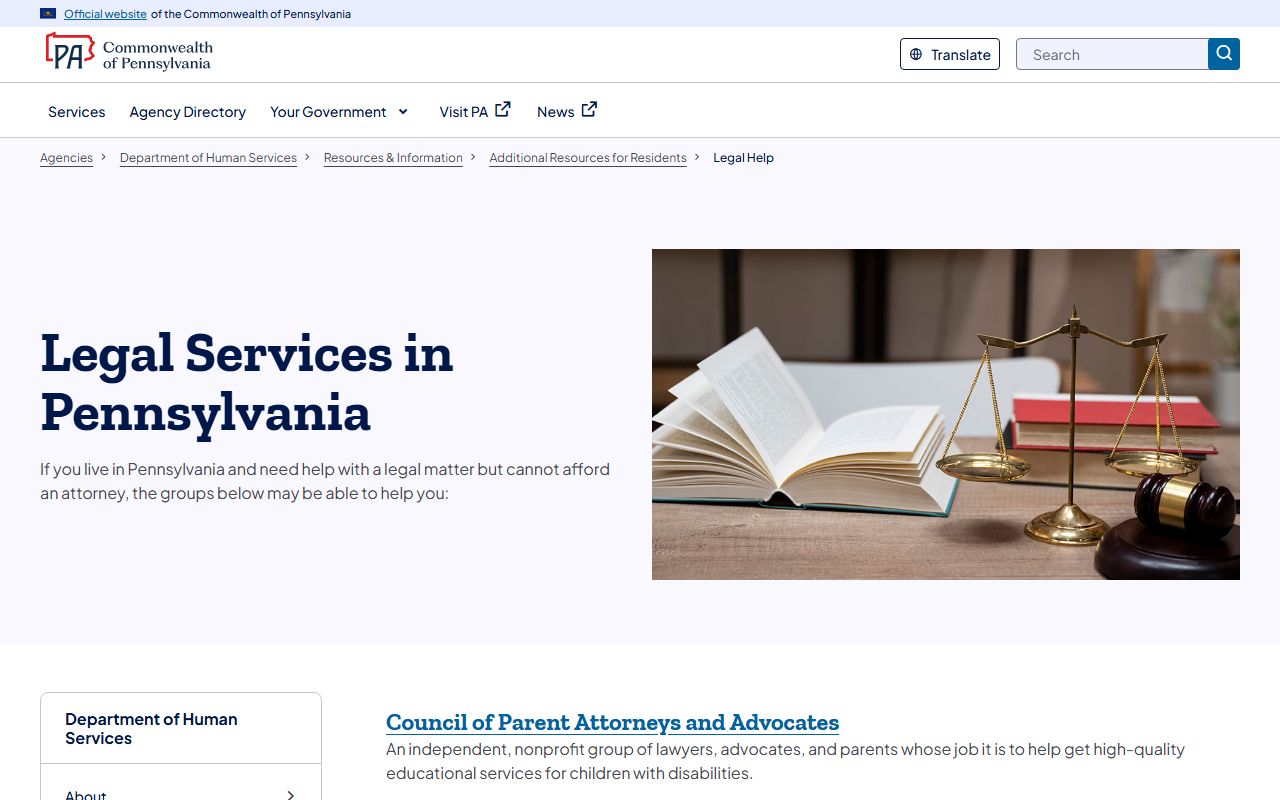
The state also keeps a plain-language guide. Pennsylvania's DHS legal help page points residents to Legal Aid of Southeastern Pennsylvania and PA Law Help, as shown below.
For criminal defense help, the arrest records page lists the Public Defender and District Attorney contacts in full.
Accuracy and Record Limitations
Online records lag real life. UJS states that recent filings made at a court office may not appear on a docket sheet right away. A case can also be too old for the public database, sealed by order, or held only on paper at a local office. None of that means the case does not exist.
Note: Before you rely on an online docket for a legal, job, or housing decision, confirm the details with the office that holds the record.
History of Montgomery County Courts
Pennsylvania's Unified Judicial System is one of the oldest court systems in North America, growing from part-time local courts before 1700 into a statewide automated system. Montgomery County's modern Court of Common Pleas serves as the 38th Judicial District with its five divisions and 29 Magisterial District Courts.
Records reach back a long way. The Register of Wills keeps Montgomery County marriage records from 1885 to the present and birth records for people born in the county between 1893 and 1915. Newer steps point the other way, toward electronic filing for civil, probate, and marriage matters, and the 2026 Drug Court certification shows the system still changing.
Frequently Asked Questions
How do I search Montgomery County criminal court records?
Use the Pennsylvania UJS Case Search. Choose a search type such as Participant Name, Docket Number, or OTN, and select Montgomery County for name searches. The Clerk of Courts notes that UJS gives case information and docket sheets, but it is not an official background check. For that, use Pennsylvania State Police PATCH.
What is the difference between the Prothonotary and the Clerk of Courts?
The Prothonotary is the elected civil clerk. It handles civil suits, divorce, custody, judgments, liens, name changes, and PFA filings. The Clerk of Courts is the elected criminal clerk and keeps the official criminal case records for the Court of Common Pleas. Two offices, two record types.
Does Montgomery County publish an inmate roster online?
The official Correctional Facility pages reviewed do not post a public current-inmate roster. For county custody questions, call the facility at 610-635-7100, option 2. State inmates show on the PA DOC locator, and federal inmates show on the Bureau of Prisons locator.
More answers sit on the Montgomery County Court Records FAQ page.