
How to Find Montgomery County Arrest Records
There is no single county website that posts a public arrest blotter with mugshots for Montgomery County. The official pages reviewed do not publish one. Instead, an arrest shows up as a criminal case on the Pennsylvania Unified Judicial System portal once charges are filed. The UJS Case Search is the free public tool for that record.
Start with what you know. A name works, but an OTN, a docket number, or a citation number works better. For a name search, set County to Montgomery so you do not pull matches from across the state. A Common Pleas criminal docket reads CP-46-CR; a district court summary case starts with MJ and a 38 number.
- Open UJS Case Search and pick Participant Name, OTN, or Docket Number.
- For a name, enter last and first name and choose Montgomery County.
- Open the docket sheet to read the charges, bail, and case events.
- Check the active bench warrant list if the person may have missed a court date.
- Call the jail at 610-635-7100, option 2, for a current county custody question.
Pennsylvania's criminal-record rules come from the Criminal History Record Information Act, which controls how this information is collected and shared.
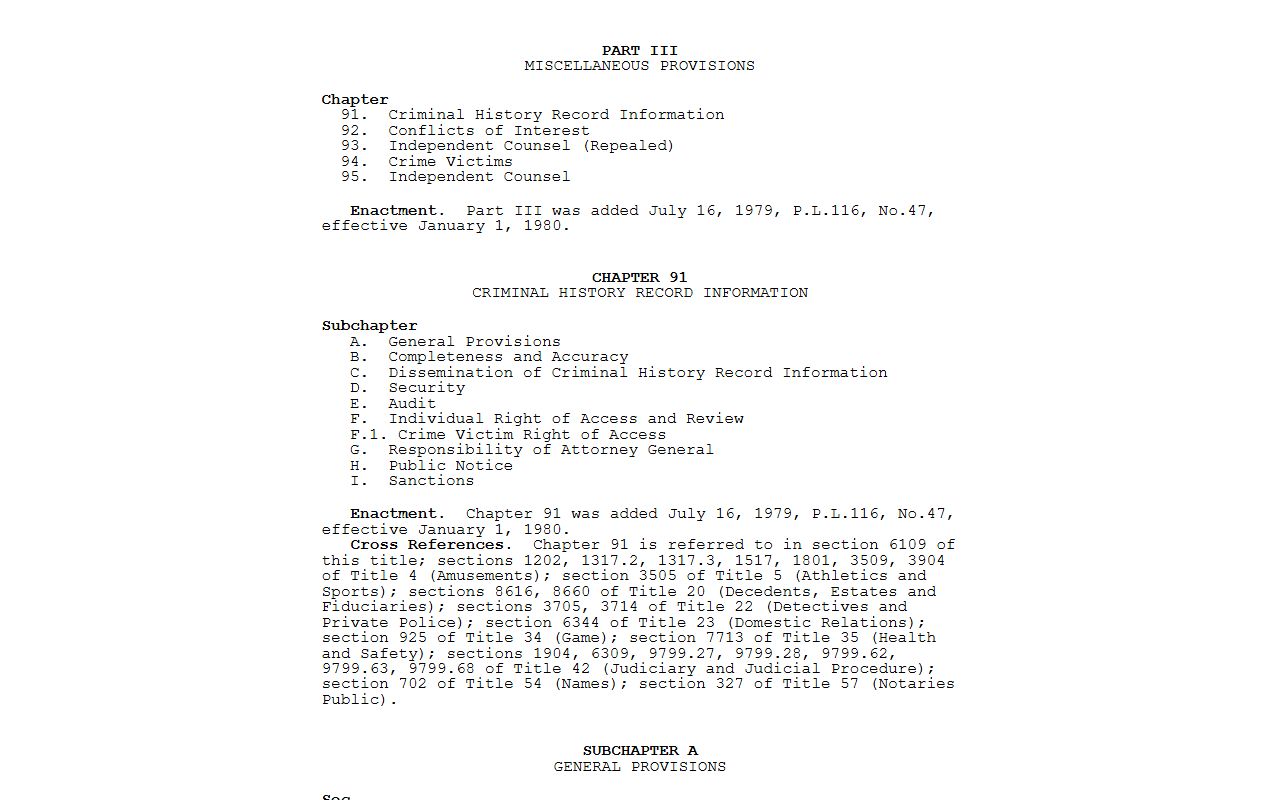
That statute is why a free docket and an official background check are treated so differently, a point covered further below.
Arrest Records vs Criminal Court Records
An arrest record and a criminal court record are related but not identical. An arrest is the moment police take someone into custody. The court record is the case that follows. The comparison below shows where each one lives in Montgomery County.
| Point | Arrest Record | Criminal Court Record |
|---|---|---|
| What it is | The booking and charges at arrest | The full case from arraignment to disposition |
| Where to find it | UJS docket once charges are filed; jail for custody | UJS docket; Clerk of Courts for certified copies |
| Official keeper | Arresting agency and the courts | Clerk of Courts, Court of Common Pleas |
For the full case history, the court records page covers every search tool in detail.
What a Montgomery County Arrest Record Shows
Once charges are filed, the public docket carries the parts of the arrest that are open to view. It will not show every field a police booking sheet holds, and it leaves out protected data by rule. The list below covers what you can usually read on a Montgomery County criminal docket tied to an arrest.
- Case caption - court, county, and the CP-46 or MJ docket number.
- Charges - the offenses filed, with the grading and statute.
- OTN - the Offense Tracking Number linking the charges to the person.
- Bail - the bail type and amount set in the case.
- Events - arraignment, hearings, motions, and the disposition.
Fields like Social Security numbers, full dates of birth, and driver license numbers are kept out of the public record. So is a booking photo, since the county does not post one in the official sources reviewed.
Charges vs Convictions in Montgomery County Records
This difference matters more than any other on a criminal record. A charge is an accusation. A conviction is a finding of guilt. A person can be arrested and charged, then have the case dismissed, withdrawn, or end in a not-guilty verdict. The docket's disposition line, not the charge line, tells you the real outcome.
| Term | What It Means |
|---|---|
| Charge | The offense police or the Commonwealth allege. |
| Disposition | The court's decision on each charge. |
| Conviction | A guilty plea or guilty verdict on a charge. |
| Non-conviction | Dismissed, withdrawn, not guilty, or acquitted. |
Reading these correctly keeps you from treating an arrest as a conviction, which is both unfair and, for hiring or housing, often unlawful.
The District Attorney and County Police
The District Attorney prosecutes crime in Montgomery County, but the office does not keep the public court docket; the Clerk of Courts does that. District Attorney Kevin R. Steele leads the office from the courthouse on Airy Street, and his page lists news, victim services, and the ARD diversion program.
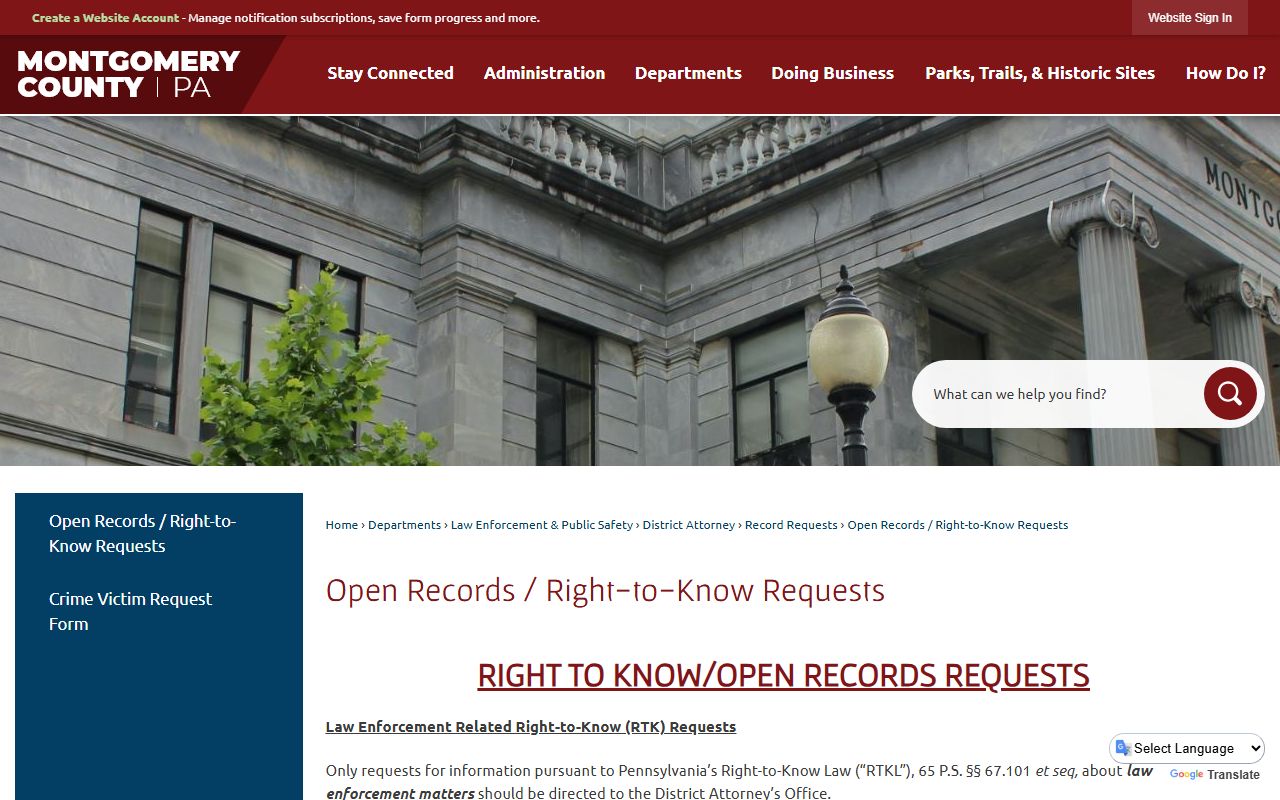
The DA and the County Detective Bureau work with 50 police departments across the county, so an arrest can come from any of those local forces.
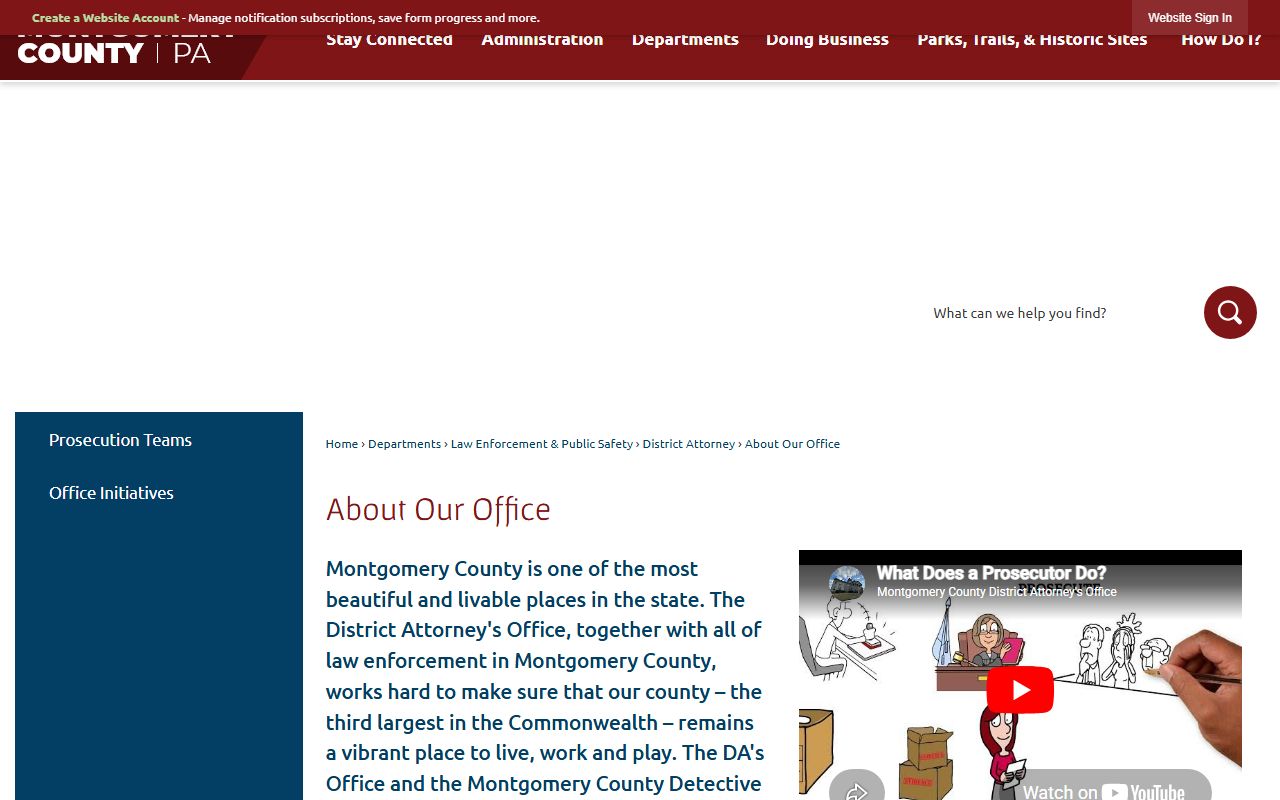
Law-enforcement related Right-to-Know requests go to the DA's own open-records officer, not the general county officer, as the DA pages explain.
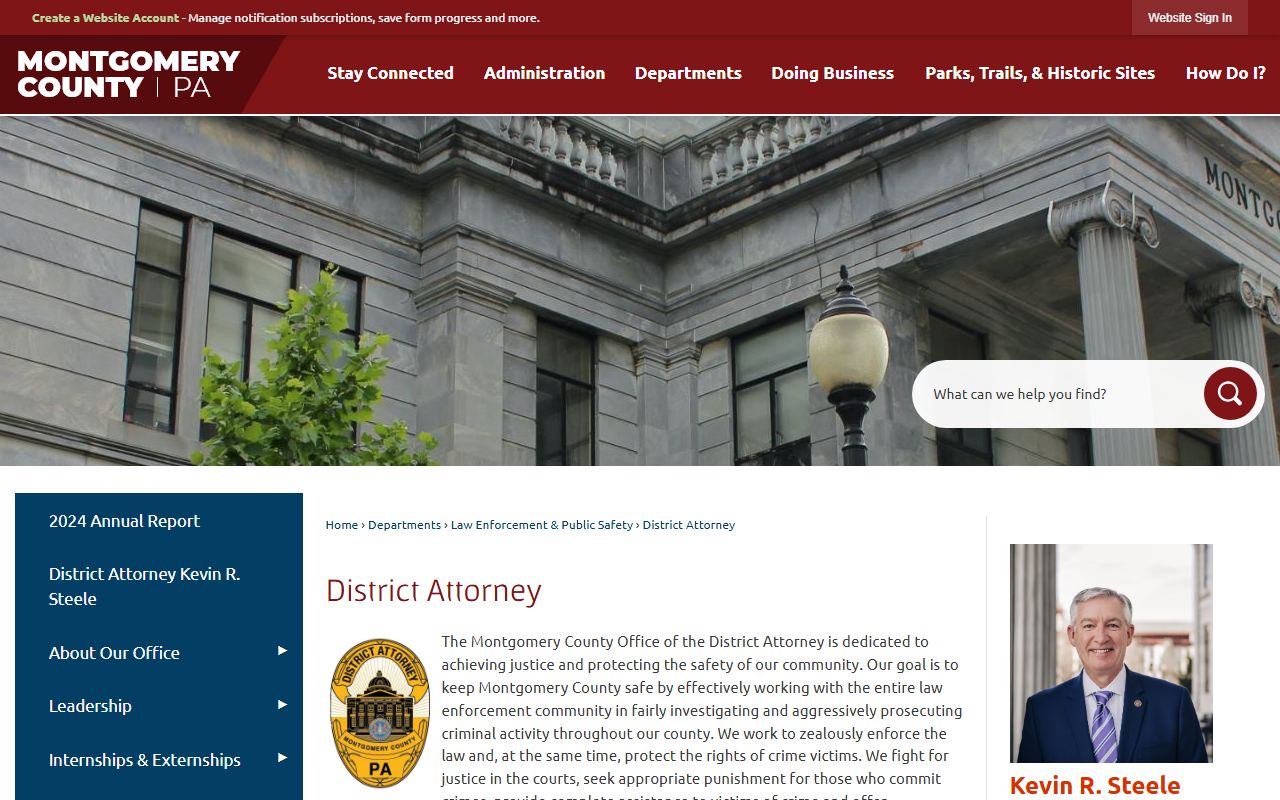
The DA also runs programs that change how a case ends. The ARD program offers some first-time, non-violent defendants a path to a dismissal and a later expungement if they complete its terms. The office lists a drug disposal program, victim and witness services, and community crime-prevention work too. To report a crime or reach victim services, use the contacts on the DA pages above. For records access rules, see the public records page.
Criminal History and PATCH Background Checks
This is the point both the county and the state repeat: a UJS docket is not a background check. UJS and the Clerk of Courts both warn that docket sheets show case information, not a verified criminal history. The official background check in Pennsylvania comes from the State Police through the PATCH system.
So when do you need which one? For a quick case status, a free docket is fine. For employment, licensing, immigration, or a school requirement, you usually need a certified disposition from the Clerk of Courts or a PATCH report. A certified disposition is case-specific; a PATCH report is a statewide history. They serve different needs, and knowing the difference avoids a rejected application.
There is one more limit worth knowing. Even a thorough docket search can miss a case. A record may be sealed, expunged, held only on paper at a local district court, or simply too new to post. An empty result does not prove a clean history, and a single docket does not prove a full one. That is the core reason the state points formal users to PATCH rather than to a public docket.
Important: Do not rely on a free online docket as a background check. Use a certified copy from the Clerk of Courts or a Pennsylvania State Police PATCH report for any formal purpose.
Mugshots and Booking Records in Montgomery County
Montgomery County does not publish an official online mugshot gallery or public booking blotter in the sources reviewed. The Correctional Facility page does not post a public current-inmate roster with photos. Many third-party sites claim to offer Montgomery County mugshots, but those are not official, and they often charge fees or post outdated images.
For real custody information, call the Montgomery County Correctional Facility, use the court docket for charges and dates, and check the active bench warrant list for outstanding cases. The inmate records page explains the facility and the state and federal locators in full.
Be cautious with the photo sites. They are not official, they may post images for cases that were later dropped or expunged, and some charge to remove a photo. None of that reflects the official Montgomery County record, and the FCRA bars using any of it for credit, hiring, or housing decisions.
Expungement, Limited Access, and Clean Slate
Pennsylvania gives people three main ways to clear or hide a record, and they are not the same. Expungement removes a qualifying record. Limited access hides certain misdemeanor convictions from the public while police and courts still see them. Clean Slate seals eligible records automatically or by petition. The Clerk of Courts handles the filings and explains each path.
The county lists three rules: Pa.R.Crim.P. 490 for summary offenses left at the district court, Pa.R.Crim.P. 790 for Common Pleas misdemeanor and felony cases, and Pa.R.Crim.P. 791 for limited access. The expungement filing fee is $176.50 and covers service on one agency, with $13.50 for each extra agency. The comparison below sums up the difference between sealing and expunging.
| Point | Sealed (Limited Access / Clean Slate) | Expunged |
|---|---|---|
| Public can see it | No | No |
| Police and courts can see it | Yes | Generally no |
| Record erased | No, only hidden | Yes, removed for qualifying records |
Clean Slate has grown over time, from Act 56 of 2018 through Act 36 of 2023, which expanded automatic sealing and shortened some waiting periods. Current and former Public Defender clients can use the Public Defender Expungement Clinic for help.
Juvenile Criminal Records in Montgomery County
Juvenile records sit apart from adult records and stay restricted. The Juvenile Clerk of Courts keeps delinquency, dependency, and miscellaneous juvenile files at the Montgomery County Youth Center in Eagleville. Access requires advance contact and a valid photo ID for the juvenile or a person entitled to the file.
Juvenile expungement is not automatic in most cases, apart from informal adjustments or approved consent decrees handled through Juvenile Probation. Juvenile payment dockets use the CP-46-JV format, but public search access to juvenile cases is blocked by law.