
The Pennsylvania Right-to-Know Law
The Right-to-Know Law, found at 65 P.S. Sections 67.101 through 67.3104, gives the public a right to records held by state and local agencies. It sets response deadlines and provides an appeal path through the Pennsylvania Office of Open Records. Montgomery County identifies Act 3 of 2008 as the law behind its own open-records process.
The state Office of Open Records explains the framework and handles appeals when an agency denies a request.
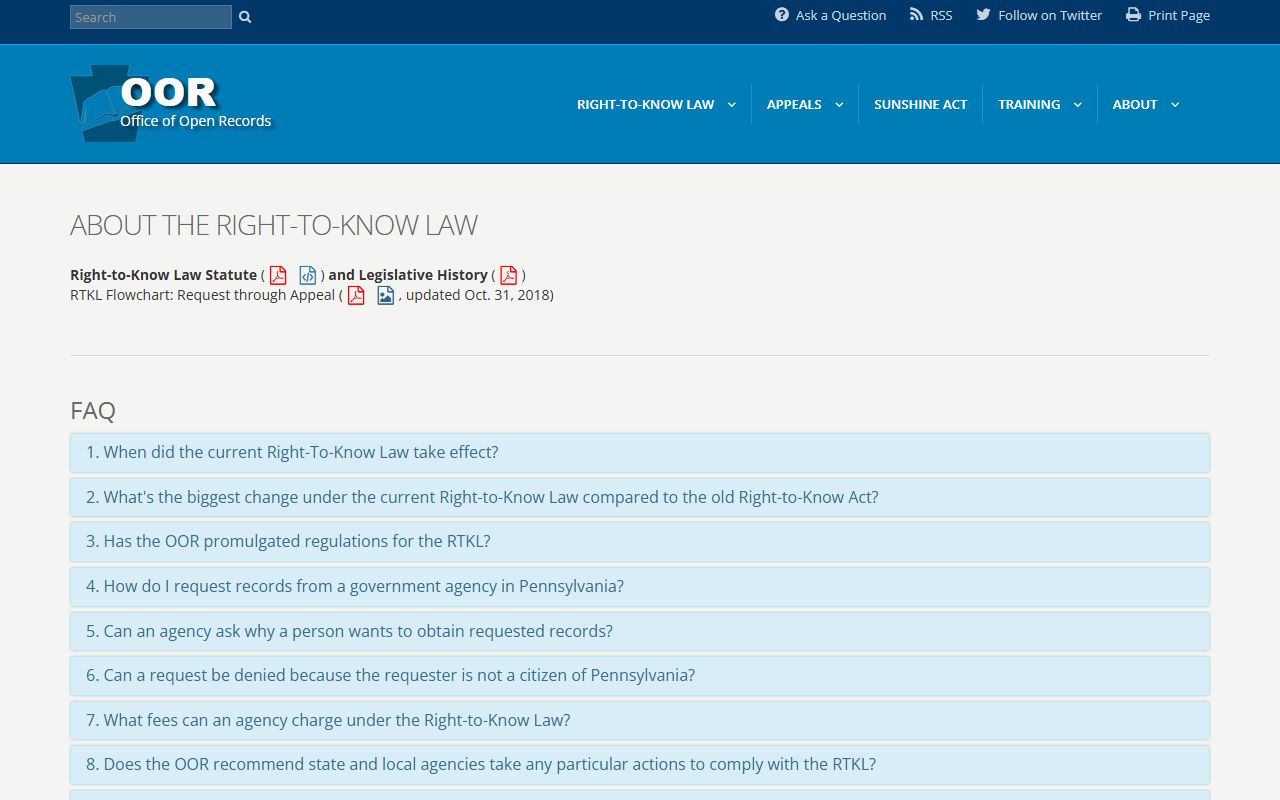
Under the law, an agency record is presumed public unless a specific exception applies. You do not have to explain why you want a record. That presumption is the backbone of the whole system, and it is why a clear, specific request usually gets a faster answer.
The appeal right matters too. If an agency denies a request or stays silent past the deadline, you can appeal to the Office of Open Records, which reviews the denial and can order the record released. That outside check is what gives the law teeth. It also means an agency cannot simply ignore a proper request without a legal reason it is willing to defend on appeal.
Court Records Are Not Ordinary Right-to-Know Requests
Here is the exception that trips people up. Court case records are not obtained through a Right-to-Know request. They follow the Unified Judicial System's Case Records Public Access Policy instead. So a request for a criminal docket, a civil case file, or a marriage record does not go to the county's open-records officer; it goes to the right court office.
That split sends different records to different places. Criminal court records go to the Clerk of Courts. Civil and divorce records go to the Prothonotary. Wills and marriage records go to the Register of Wills. Only non-court county records, such as administrative or environmental files, run through the Right-to-Know process. The court records page covers the court side in full.
Why does the state keep them apart? Courts manage their own records under the judiciary's authority, while agencies answer to the Right-to-Know Law. Filing a Right-to-Know request for a court docket usually leads to a redirect, not a record, which wastes everyone's time. The state judiciary even reminds users that, for paper Magisterial District Court records, the right move is to contact the specific district court office directly, and a complex request may need a written form.
How to File a Montgomery County Public Records Request
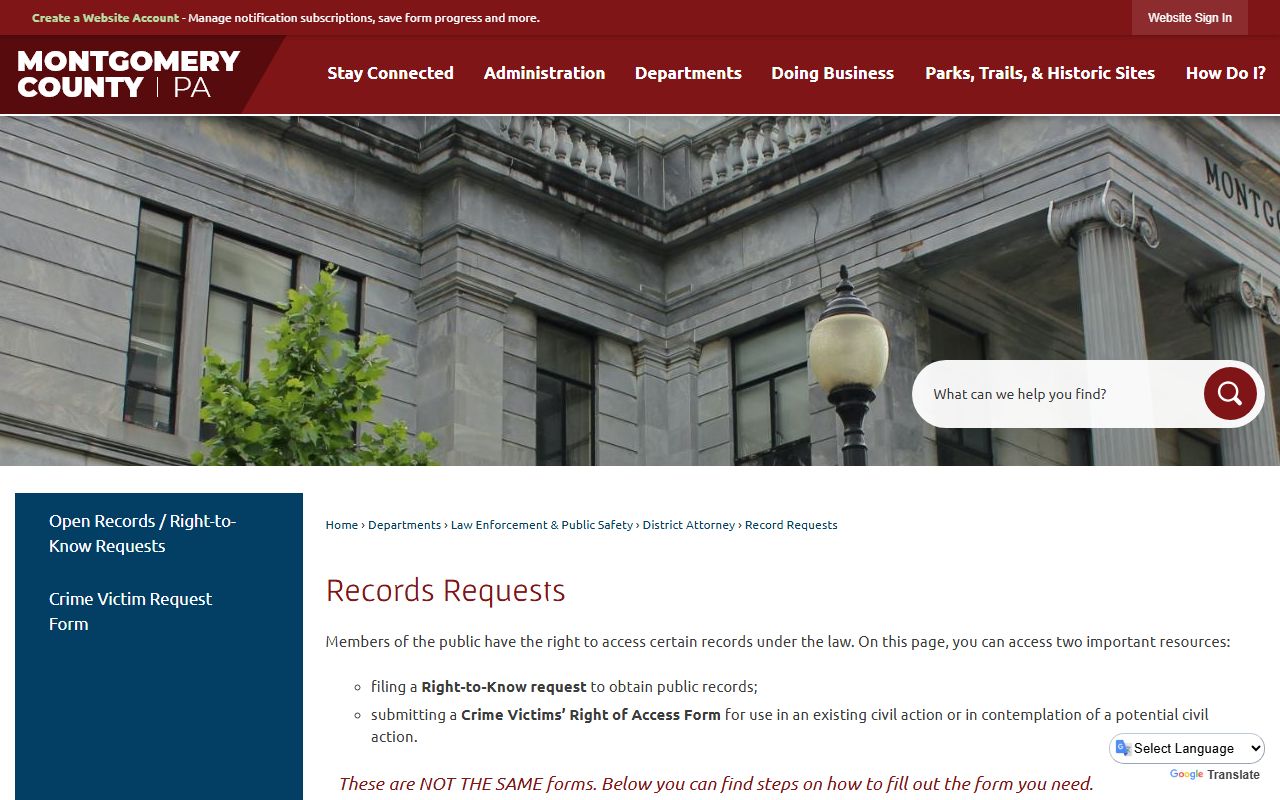
For a true agency record, the county runs a Right-to-Know process with its own request page and form. The county recommends email for timely receipt and response.
- Identify the record and confirm it is an agency record, not a court record.
- Complete the county Right-to-Know / Open Records request form.
- Describe the records with enough detail for staff to find them.
- Submit by email, mail, fax, or in person, with email preferred.
- Watch for the agency response within the legal deadline, or appeal a denial.
The county distinguishes a standard Right-to-Know request from a Crime Victims' Right of Access request, so use the form that matches your purpose. A specific request is easier to grant than a broad one.
Right-to-Know Request Form Fields
The county form asks for contact details and a clear description of the records. The inventory below lists the main fields you will complete.
| Field | Type | Notes |
|---|---|---|
| Date Requested | Date | The date you submit the request. |
| Request Submitted By | Checkbox | Email, U.S. Mail, Fax, or In Person. |
| Requester Name and Address | Text | Your name, street, city, state, and ZIP. |
| Telephone and Email | Text | Contact details for the response. |
| Records Requested | Multiline text | Describe the records with enough specificity. |
| Copies / Certified Copies | Checkbox | Choose inspection or copies; certification may carry a fee. |
The agency completes its own section, marking the request granted, partially granted, or denied, and noting any cost or third-party notice.
Right-to-Know Copy Fees
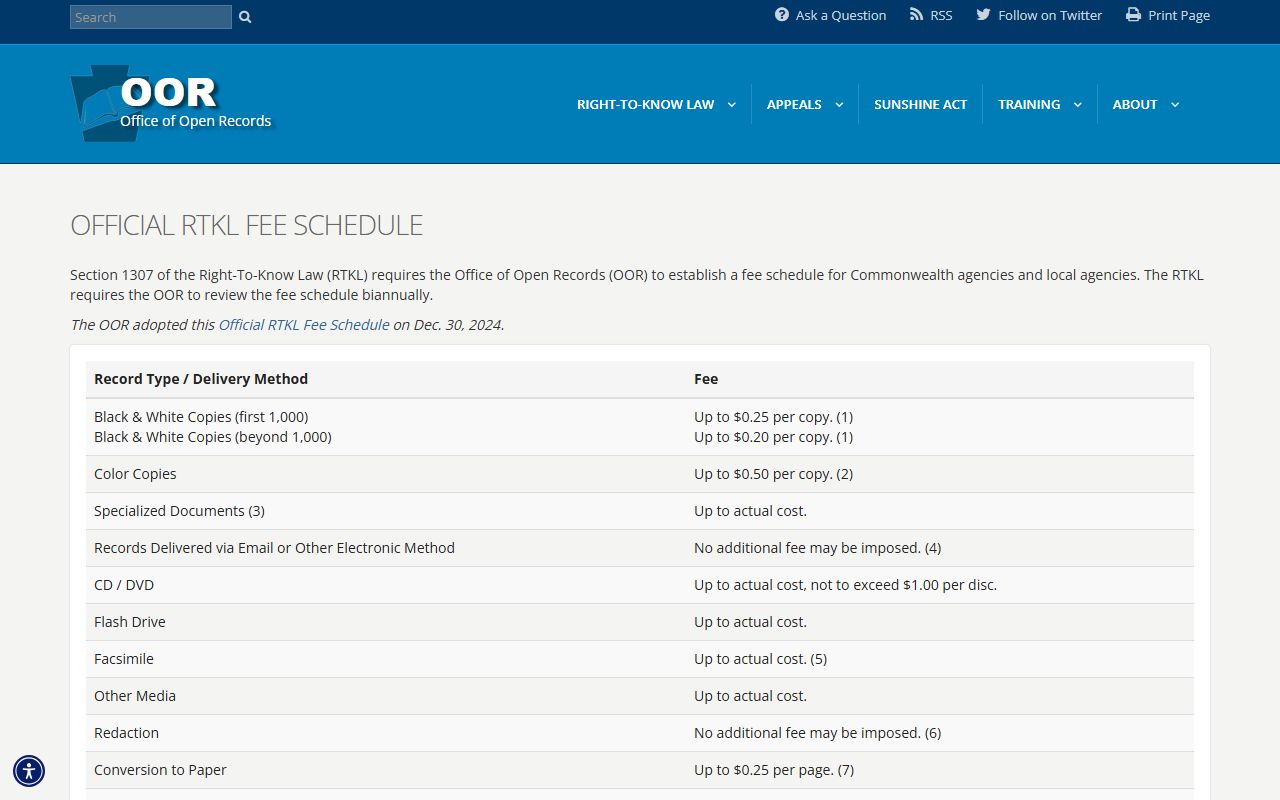
Copy fees for agency records follow the Office of Open Records fee schedule, adopted December 30, 2024. These are duplication fees, and they are different from court certification fees.
| Item | Amount |
|---|---|
| Black-and-white copy (first 1,000 pages) | Up to $0.25 per page |
| Black-and-white copy (beyond 1,000 pages) | Up to $0.20 per page |
| Color copy | Up to $0.50 per page |
| Email delivery | No added fee |
| CD or DVD | Up to actual cost, not over $1 |
| Postage | Actual cost |
Note: these Right-to-Know fees do not apply to court records. A Civil Viewer pleading view or a certified court copy is priced separately by the court office.
County Open Records and Local Policy
The county publishes its own open-records instructions and policy, built on Act 3 of 2008. The page below explains how the local process works and what to expect after you file.
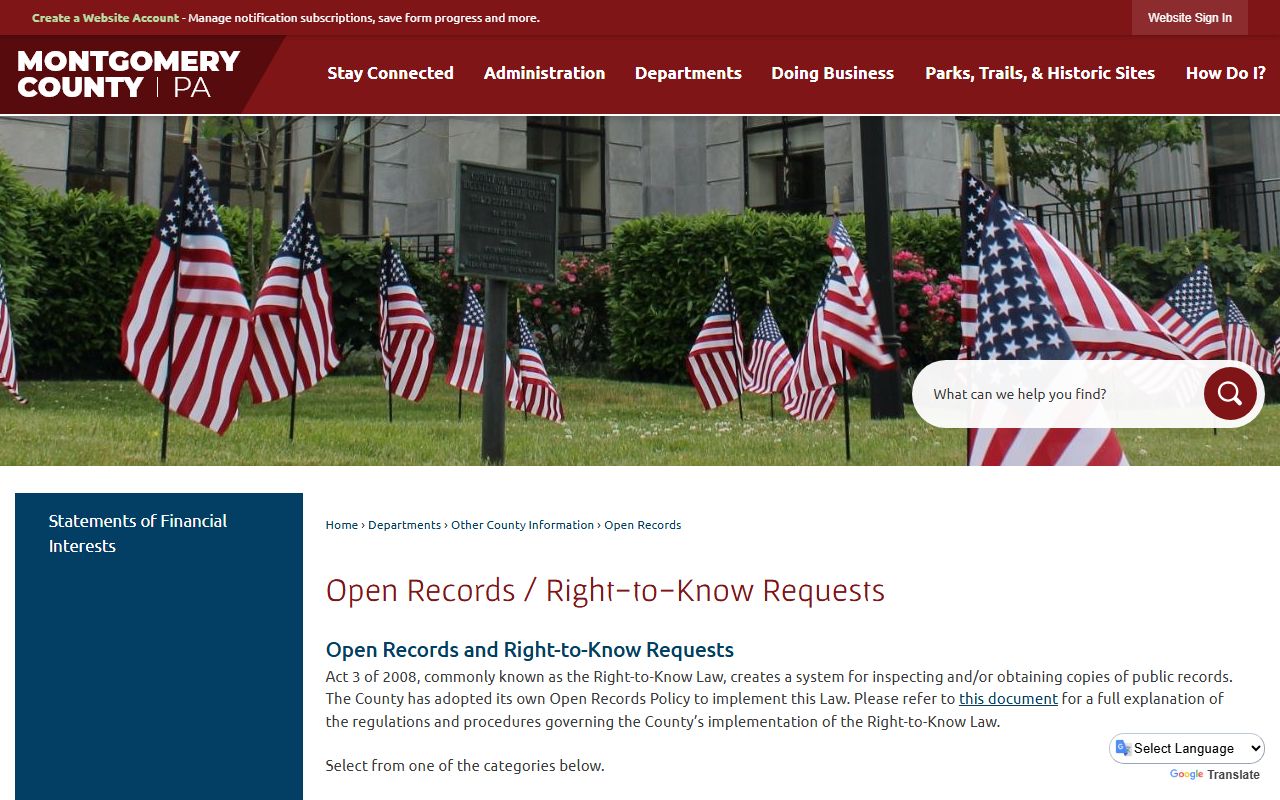
The county routes several kinds of requests to different lanes. Other county records, including environmental and media requests, go through the county Open Records Officer. The county also uses a public portal for some submissions. When in doubt about which lane fits, the county records page points you in the right direction.
Law-Enforcement Records and the DA
Law-enforcement related Right-to-Know requests follow yet another path. Requests under the Right-to-Know Law about law-enforcement matters go to the District Attorney's Office, not the general county officer. The DA lists its open-records email as daopenrec@montgomerycountypa.gov and names a Deputy District Attorney as the Open Records Officer.
This matters because people often expect police or prosecution material through the county officer. For those records, the DA's office handles the request and explains appeal rights. For criminal case dockets, though, that is still a court record at the Clerk of Courts, which the arrest records page covers.
Keep the three lanes straight, and most requests go smoothly. Court case records go to the relevant court office. Law-enforcement records go to the DA's open-records officer. All other county agency records go to the county Open Records Officer. Sending a request to the wrong lane is the single biggest cause of delay, because the request has to be redirected before anyone can answer it.
County Forms and Other Records
Beyond formal requests, the county posts many forms and applications online, which can save a Right-to-Know request altogether when a record is already published.
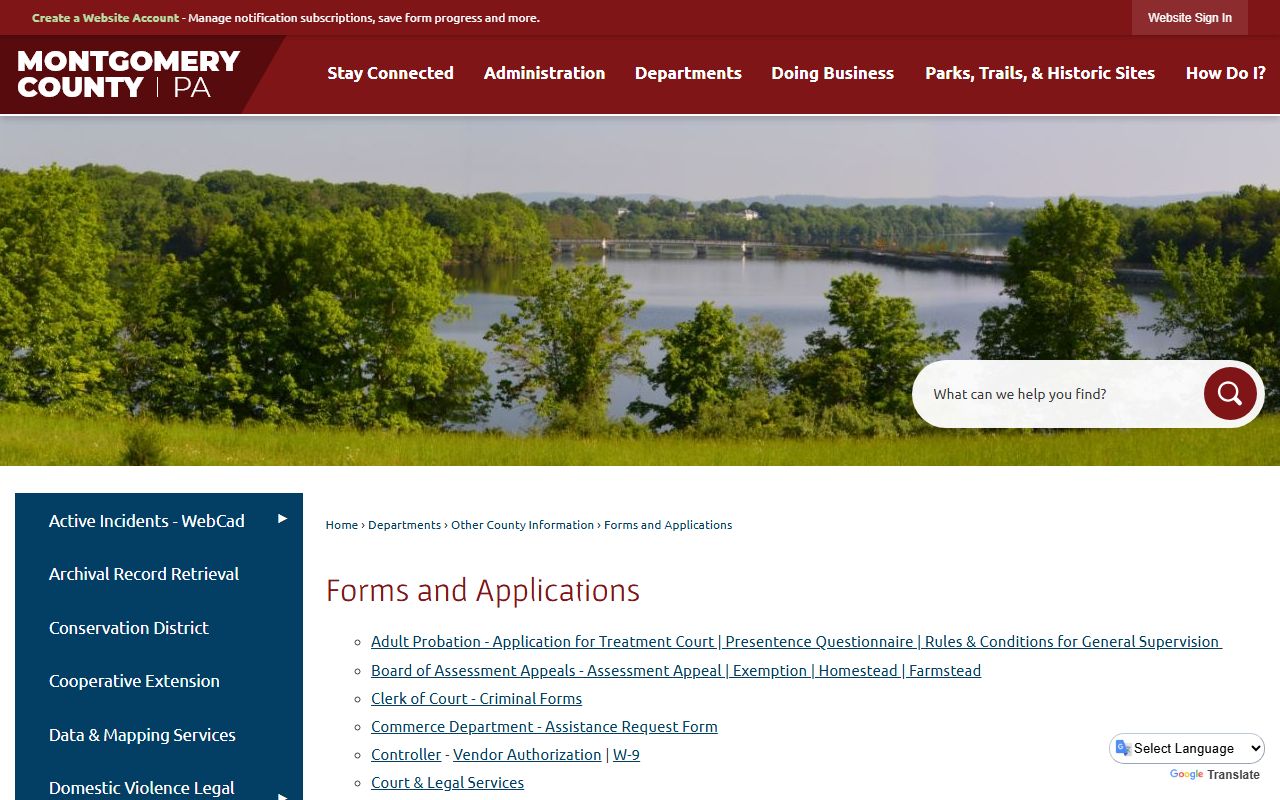
Before you file a request, check whether the record is already a published form, a posted report, or a court docket you can pull yourself. Many records people seek are not hidden; they are simply in a different place than the open-records form. Starting with the published material is faster and free, and it often answers the question without any request at all.
Federal Records Access
County and state open-records rules do not reach federal records. Federal court files live on PACER, and the local federal system is the U.S. District Court for the Eastern District of Pennsylvania. Its electronic filing system, CM/ECF, is where attorneys file and view federal case documents.
Bankruptcy is its own federal court. The U.S. Bankruptcy Court for the Eastern District of Pennsylvania keeps bankruptcy filings that never appear in county records.
Federal prosecutions come from the U.S. Attorney's Office for the Eastern District of Pennsylvania, which is separate from the county District Attorney.
So a county Right-to-Know request will never produce a federal court file. For those, the court records page explains PACER and the federal courts that serve the county. The simple rule: if the case was federal, the record is federal, and no county or state open-records process will reach it.
Why Some Records Are Redacted
Even open records can come back with parts blacked out. Both the Right-to-Know Law and the court Case Records Public Access Policy require certain data to stay confidential. That covers Social Security numbers, financial account numbers, driver license numbers, most details about minors, and the addresses of protected parties in abuse cases.
So a redacted page is not an agency hiding something improper; it is usually the law at work. If a record is withheld entirely, the agency must cite a legal basis, and you can appeal to the Office of Open Records for agency records or raise the issue with the court for case records. Knowing this ahead of time saves frustration when a record comes back with names or numbers blacked out, and it tells you whether an appeal is worth filing.