
The Montgomery County Court of Common Pleas
The Court of Common Pleas is the general trial court for Montgomery County, organized as the 38th Judicial District. It runs five divisions: Civil, Criminal, Family, Juvenile, and Orphans' Court. Each division hears a different kind of case, but they all sit under the same court. Court Administration coordinates the court, led by Court Administrator Michael Kehs.
The clerks for this court are split. The Prothonotary keeps the civil records, the Clerk of Courts keeps the criminal records, and the Register of Wills keeps the Orphans' Court and probate records. So the Court of Common Pleas is the court, while those row offices are the keepers of its records. To search a case, the court records page covers the online tools, and to request a certified copy you go to the matching clerk office.
The five divisions are worth knowing, because each one handles a different slice of life. The Civil Division hears lawsuits, contract disputes, and money claims. The Criminal Division handles misdemeanor and felony prosecutions. The Family Division covers divorce, custody, and support. The Juvenile Division handles delinquency and dependency. The Orphans' Court Division oversees estates, guardianships, and adoptions. A single courthouse complex in Norristown anchors the court, with the Prothonotary and Register of Wills a block away at One Montgomery Plaza.
Court Hierarchy and Case Flow
Pennsylvania runs a unified court system, and Montgomery County fits inside it. Most everyday cases begin at the Magisterial District Court level, and serious matters move up to the Court of Common Pleas. From there, appeals climb to the statewide appellate courts. The flow below shows the path in one line.
Case flow: Magisterial District Court › Court of Common Pleas › Superior Court or Commonwealth Court › Supreme Court of Pennsylvania
| Feature | Magisterial District Court | Court of Common Pleas |
|---|---|---|
| Role | Entry-level minor court | General trial court |
| Civil limit | Claims up to $12,000 | No fixed dollar cap |
| Criminal cases | Summary cases, preliminary hearings | Misdemeanors, felonies, trials |
| Number of offices | 29 across the county | One court, five divisions |
| Docket prefix | MJ with a 38 number | CP-46 |
Appeals from Common Pleas generally go to the Superior Court, while many government and agency matters go to the Commonwealth Court. The Supreme Court of Pennsylvania is the court of last resort.
The 29 Magisterial District Courts
Montgomery County spreads its local court access across 29 Magisterial District Courts. These offices handle traffic, summary criminal, landlord-tenant, and small civil cases, and they hold preliminary hearings before serious cases move up. Each office covers specific towns, and each has its own judge. The full list below comes from the official county district court roster.
| District | Judge | Location | Phone |
|---|---|---|---|
| 38-1-01 | Marc A. Alfarano | Norristown | 610-272-3029 |
| 38-1-02 | R. Emmett Madden | Jenkintown | 215-635-1535 |
| 38-1-03 | Christopher J. Cerski | Jenkintown | 215-885-4796 |
| 38-1-04 | John D. Kessler | Abington | 215-887-2362 |
| 38-1-05 | Juanita A. Price | Jenkintown | 215-885-4120 |
| 38-1-06 | John I. McMahon Jr. | Narberth | 610-664-5262 |
| 38-1-07 | Senior MDJ assigned | Narberth | 610-896-8585 |
| 38-1-08 | Katherine E. McGill | Oreland | 215-572-7845 |
| 38-1-09 | Patrick O. Krouse | King of Prussia | 610-265-3950 |
| 38-1-10 | Douglas H. Lavenberg | Ambler | 215-542-1262 |
| 38-1-11 | Scott T. Palladino | Pottstown | 610-326-9271 |
| 38-1-12 | Edward C. Kropp Sr. | Pottstown | 610-326-9274 |
| 38-1-13 | Jodi L. Griffis | Conshohocken | 610-828-0278 |
| 38-1-15 | Denise Ashe | Norristown | 610-279-3332 |
| 38-1-16 | Hakim K. Jones | Norristown | 610-279-6226 |
| 38-1-18 | Andrea Duffy | Colmar | 215-855-3946 |
| 38-1-19 | Richard H. Welsh | Limerick | 610-495-8440 |
| 38-1-20 | Cathleen K. Rebar | Collegeville | 610-409-2515 |
| 38-1-21 | Suzan G. Leonard | Blue Bell | 215-646-8201 |
| 38-1-22 | Todd Stephens | Horsham | 215-675-2040 |
| 38-1-23 | Dara A. Nasatir | Lafayette Hill | 610-828-5226 |
| 38-1-24 | Adam T. Katzman | Harleysville | 610-584-4732 |
| 38-1-25 | Senior MDJ assigned | Bridgeport | 610-277-3377 |
| 38-1-28 | Edward Levine | Lansdale | 215-393-7534 |
| 38-2-02 | Maureen C. Coggins | Red Hill | 215-679-5811 |
| 38-2-03 | Maurice H. Saylor | Gilbertsville | 610-326-1145 |
| 38-2-04 | Karen Eisner Zucker | Narberth | 610-668-1201 |
| 38-2-08 | Thomas P. Murt | Huntingdon Valley | 215-659-6840 |
| 38-2-09 | Todd N. Barnes | Norristown | 610-945-9156 |
This list changes as judges are elected or assigned, so confirm the office on your citation or court paper before you travel. The county also publishes a "Find My Magisterial District Court" tool that matches an address to the right office. The official county roster carries the full street addresses, fax numbers, and public hours for each office, which vary from court to court.
The spread of these courts is the point. Rather than route every traffic ticket and small claim through Norristown, the county puts a local court near most communities, from Pottstown in the west to Jenkintown in the east. That keeps minor cases close to home and frees the Court of Common Pleas to focus on the larger matters. It also means the right office for a given case depends on where the ticket was issued or where the dispute arose.
Jurisdiction and the $12,000 Limit
The dividing line between the two trial levels is mostly about size and seriousness. Magisterial District Courts hear civil claims where damages do not exceed $12,000, along with traffic offenses, summary criminal cases, municipal code violations, and landlord-tenant suits. They also hold the preliminary arraignments and preliminary hearings that decide whether a serious criminal case moves forward.
The Court of Common Pleas takes the bigger cases. It handles misdemeanors and felonies, civil suits without the dollar cap, family and custody matters, and Orphans' Court estates. A case can start at a district court and move up, or it can begin at Common Pleas, depending on the charge or claim. The court dockets page explains how the docket number tells you which level a case sits at.
A criminal case shows this movement clearly. It often opens at a district court with a preliminary arraignment and a preliminary hearing, where a magisterial district judge decides whether there is enough to send the case forward. If it advances, it moves to the Criminal Division of the Court of Common Pleas for arraignment, motions, and trial. Summary offenses, by contrast, usually stay at the district court level unless they are appealed. Understanding that handoff helps you know which office to call at each stage.
Specialty and Treatment Courts
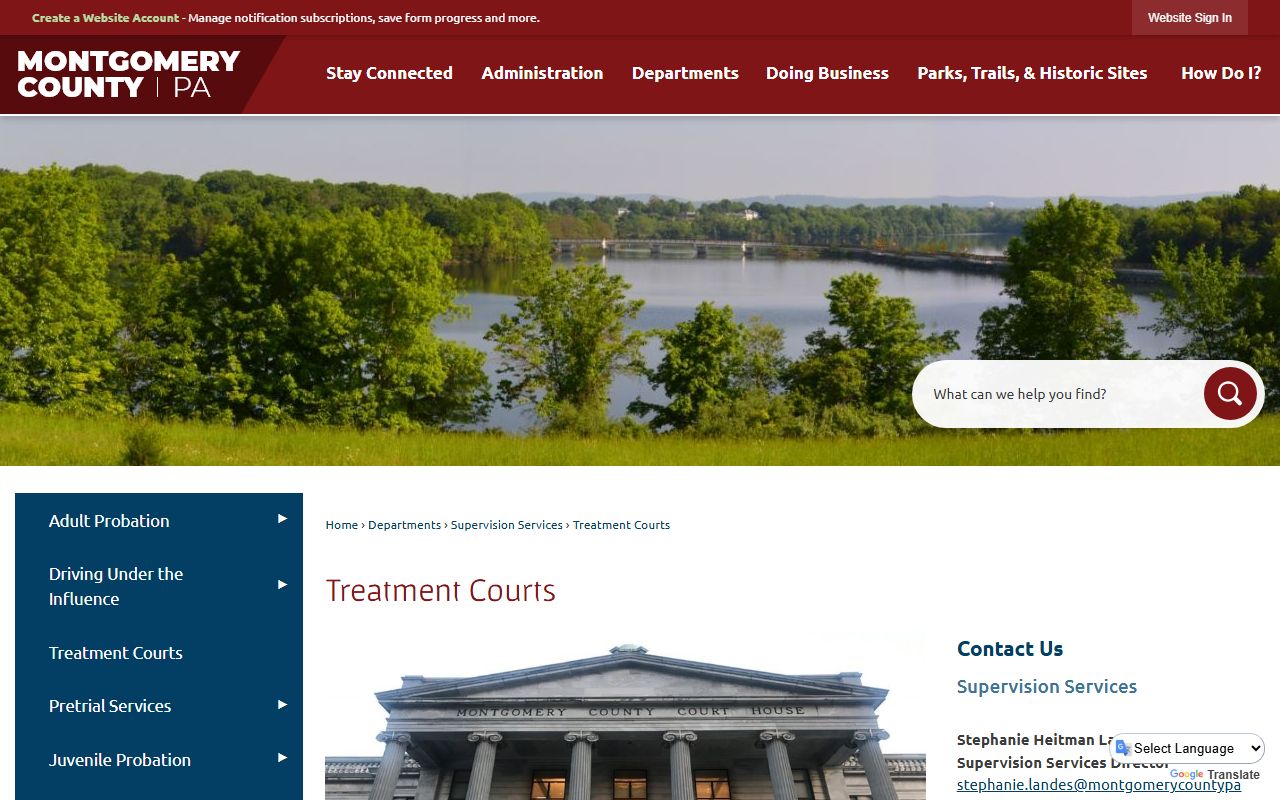
The Court of Common Pleas runs several treatment and diversion courts. These are voluntary programs that aim at the cause of repeat contact with the system, and successful completion can reduce or drop charges. The county groups them under its Treatment Courts umbrella.
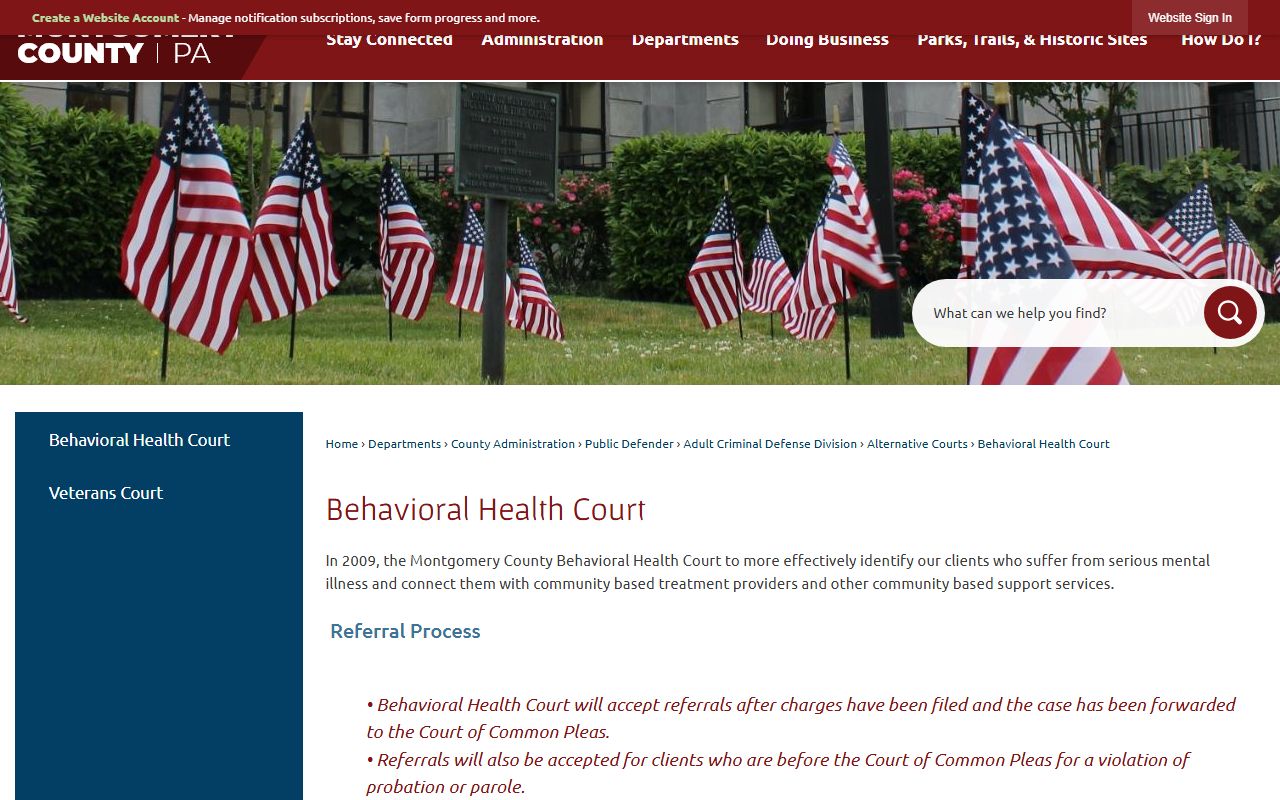
Behavioral Health Court began in 2009 for adults with a serious mental illness that contributed to the arrest. Participation is voluntary, and the contact is attorney Carol Sweeney at 610-278-3308.
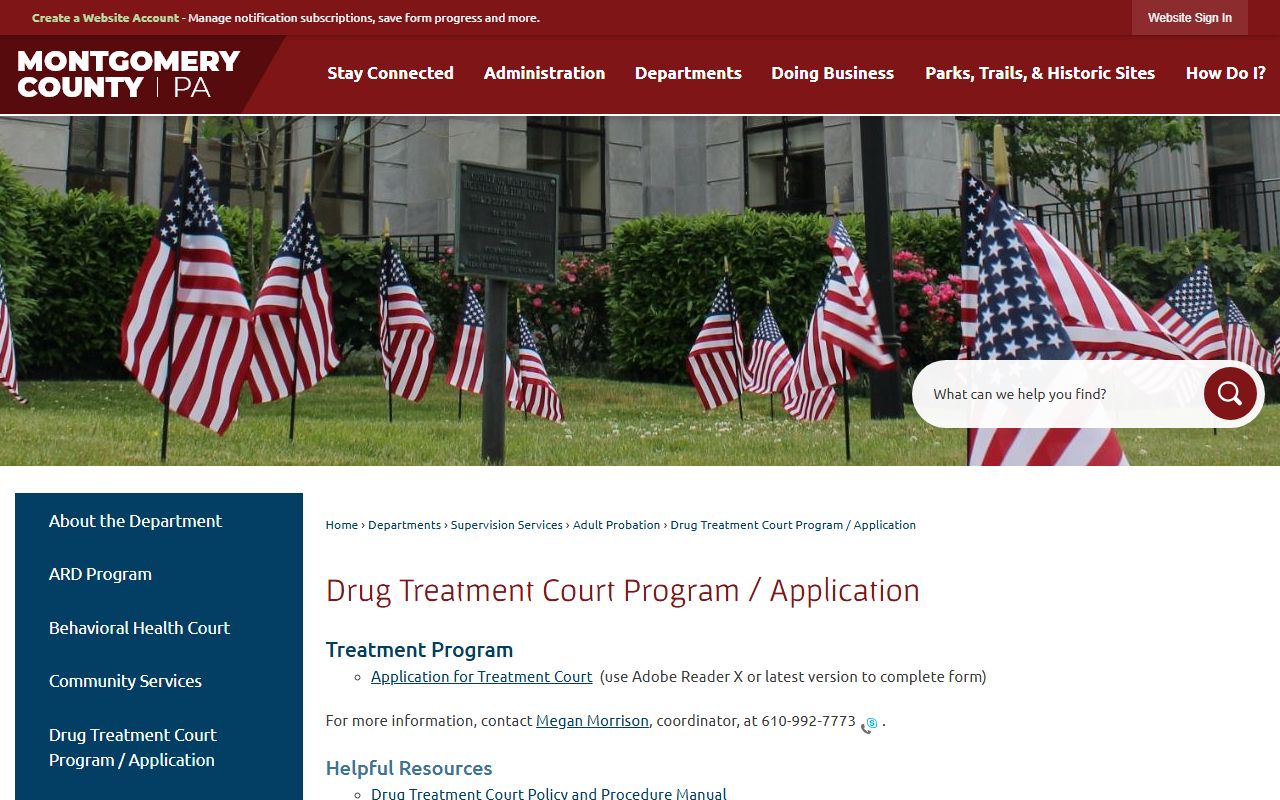
Drug Treatment Court uses a formal application, a policy manual, and a participation handbook, with coordinator Megan Morrison at 610-992-7773.
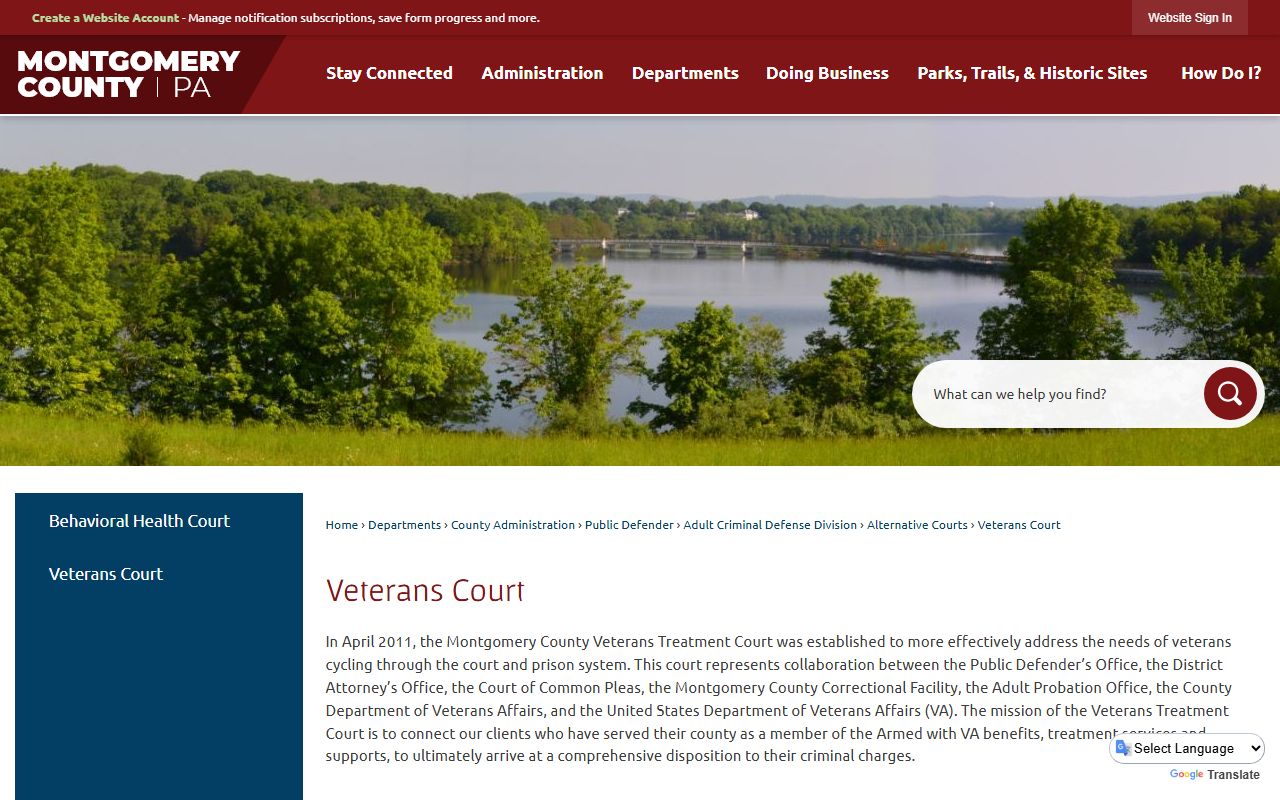
Veterans Treatment Court, established in April 2011, serves veterans eligible for VA benefits who face TBI, PTSD, military sexual trauma, or substance issues. Patricia Cassidy is the contact at 610-278-3296.
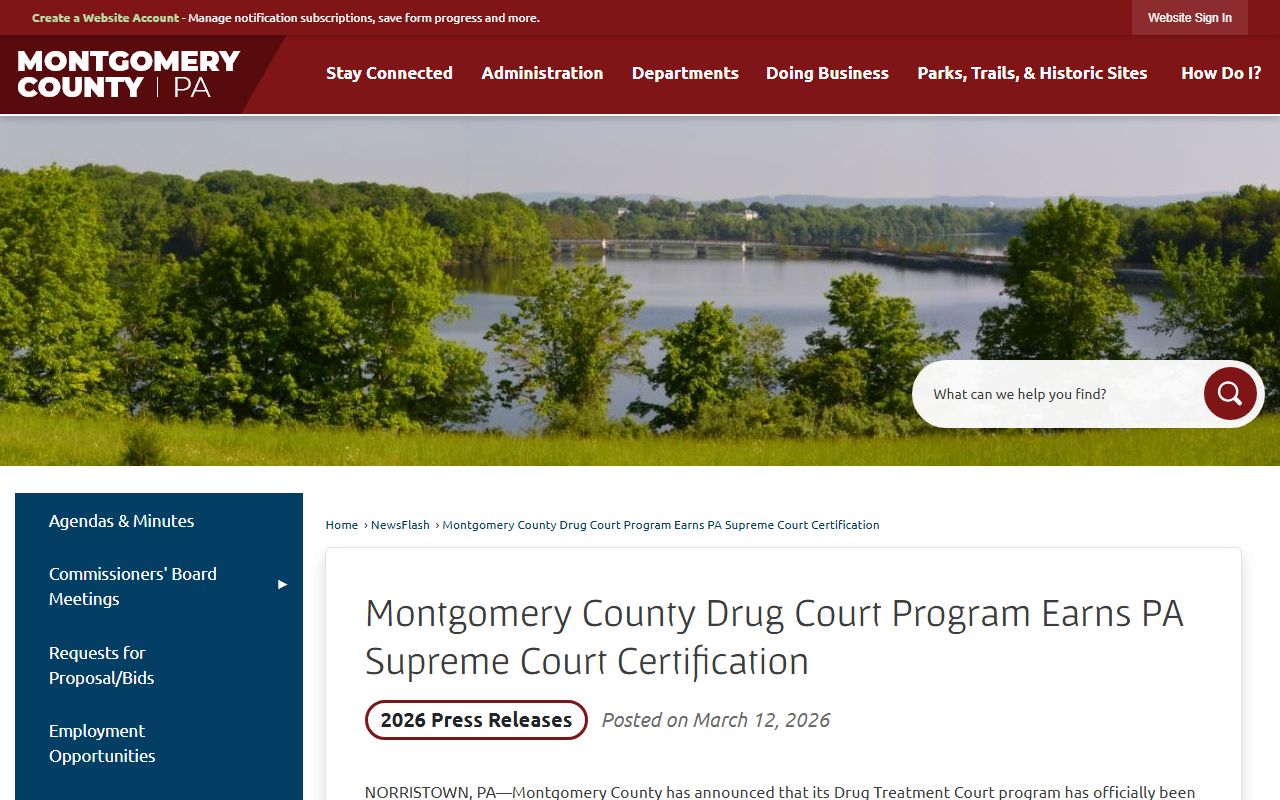
In March 2026, the county's Drug Treatment Court, led by Judge Steven T. O'Neill, earned Pennsylvania Supreme Court certification under a statewide standard for treatment courts.
General Treatment Court supervision runs through Supervision Services at 610-992-7730. These programs are diversion pathways, not a guarantee of eligibility, and each has its own referral rules. Referrals are usually accepted after charges are filed and a case reaches Common Pleas, or for an alleged probation or parole violation, and a defendant who fits more than one program may be steered to the best match. The arrest records page connects these courts to the criminal process they grow out of.
Finding Your Court and Paper Records
If you are not sure which court holds a case, start with the docket number. A CP-46 number is a Common Pleas case. An MJ number with a 38 district code is a Magisterial District Court case, and the district number points to the local office. For traffic and summary matters, the citation itself usually names the issuing district court.
Paper records follow the level. For a Common Pleas case, the Clerk of Courts holds criminal files and the Prothonotary holds civil files. For a district court case, the state judiciary tells users to contact the specific Magisterial District Court office directly, and a complex request may need a written form. Online docket sheets for all levels live on the UJS portal covered on the court records page.
Appeals From the Court of Common Pleas
A decision from the Court of Common Pleas is not always the end. Most criminal and civil appeals go to the Superior Court of Pennsylvania. Many cases involving state government, agencies, or elections go to the Commonwealth Court instead. The Supreme Court of Pennsylvania sits above both as the court of last resort.
Appeal deadlines are short and strict, often a set number of days after the decision, so a person thinking about an appeal should act quickly and get advice. The clerk office that holds the case can explain what the appeal record needs, and appellate dockets are searchable on the UJS portal once a case moves up.