
How to Search Montgomery County Probate Records
Probate records in Montgomery County run through the Register of Wills and Clerk of Orphans' Court, led by Tina Lawson. The office probates wills, processes intestate estates, and maintains the Orphans' Court dockets. It also says all of its services are now online, and it encourages online e-filing for probate matters while still accommodating walk-ins and in-person probates.
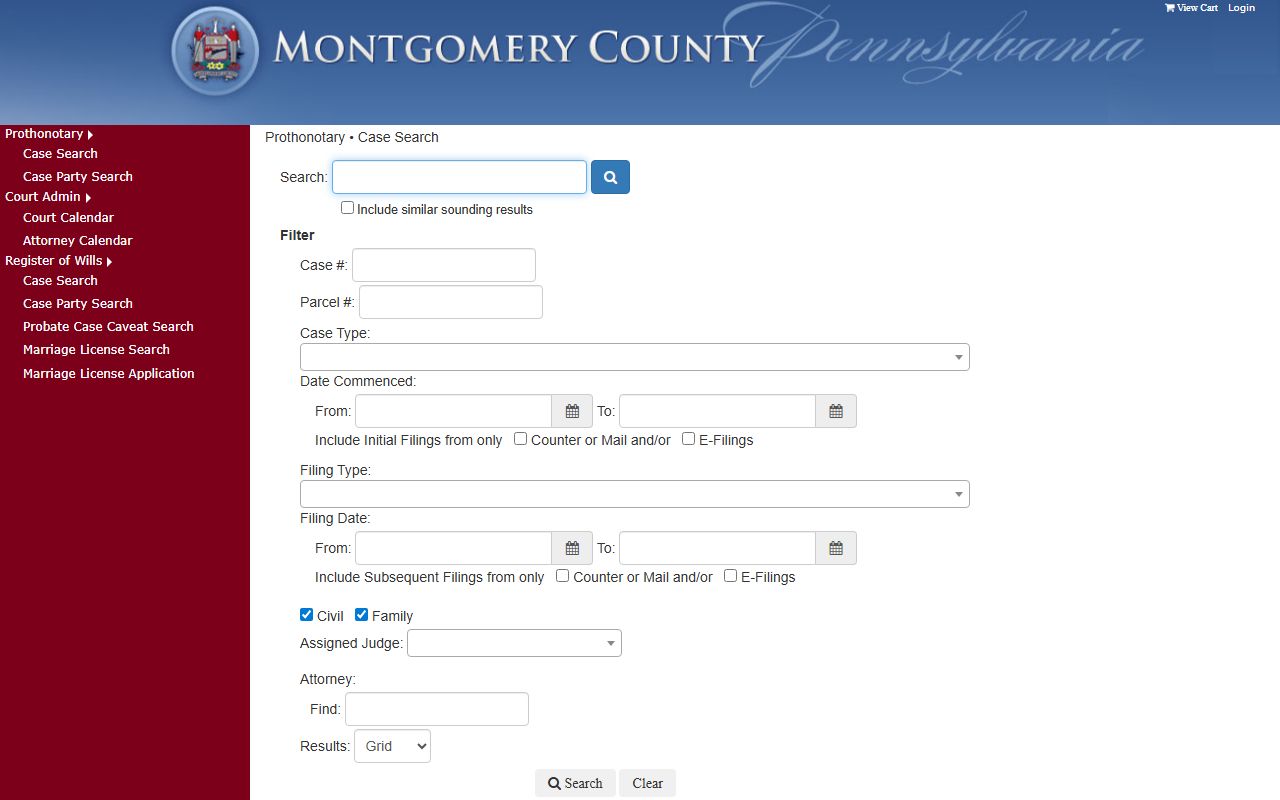
The county links a Register of Wills public access tool for probate searches, so you can look up estate records without a trip to Norristown.
For new filings, the office points users to its online e-filing system, which handles initial probates and many Orphans' Court filings.
Only emergency Orphans' Court petitions, such as emergency guardianship or emergency end-of-life decisions, are accepted over the counter. Most other estate and account filings are expected through e-filing or in-person probate.
What you can find in a probate search depends on the record type. Estate dockets, wills admitted to probate, and many Orphans' Court filings are part of the public record, while adoption files and some guardianship details are restricted. If a search does not return what you expect, the record may be sealed, may predate the online index, or may need a direct request to the office. When in doubt, call the office and describe what you need rather than guessing at the right form.
Register of Wills vs Orphans' Court
One person holds two roles in Montgomery County, and the record categories differ. As Register of Wills, the office is the probate officer: it probates wills, grants letters of administration, collects inheritance taxes as agent for the Commonwealth, receives estate accounts, and issues certified wills and short certificates. The office notes that inheritance-tax collections average more than $200 million a year.
As Clerk of the Orphans' Court, the same office keeps the Orphans' Court dockets, issues marriage licenses, files adoption petitions, and handles guardianship filings. So a will and an estate account fall under the Register of Wills side, while a guardianship report or an adoption petition falls under the Orphans' Court side. Both live at the same office, but knowing the side helps you ask for the right thing.
Wills and Intestacy in Montgomery County
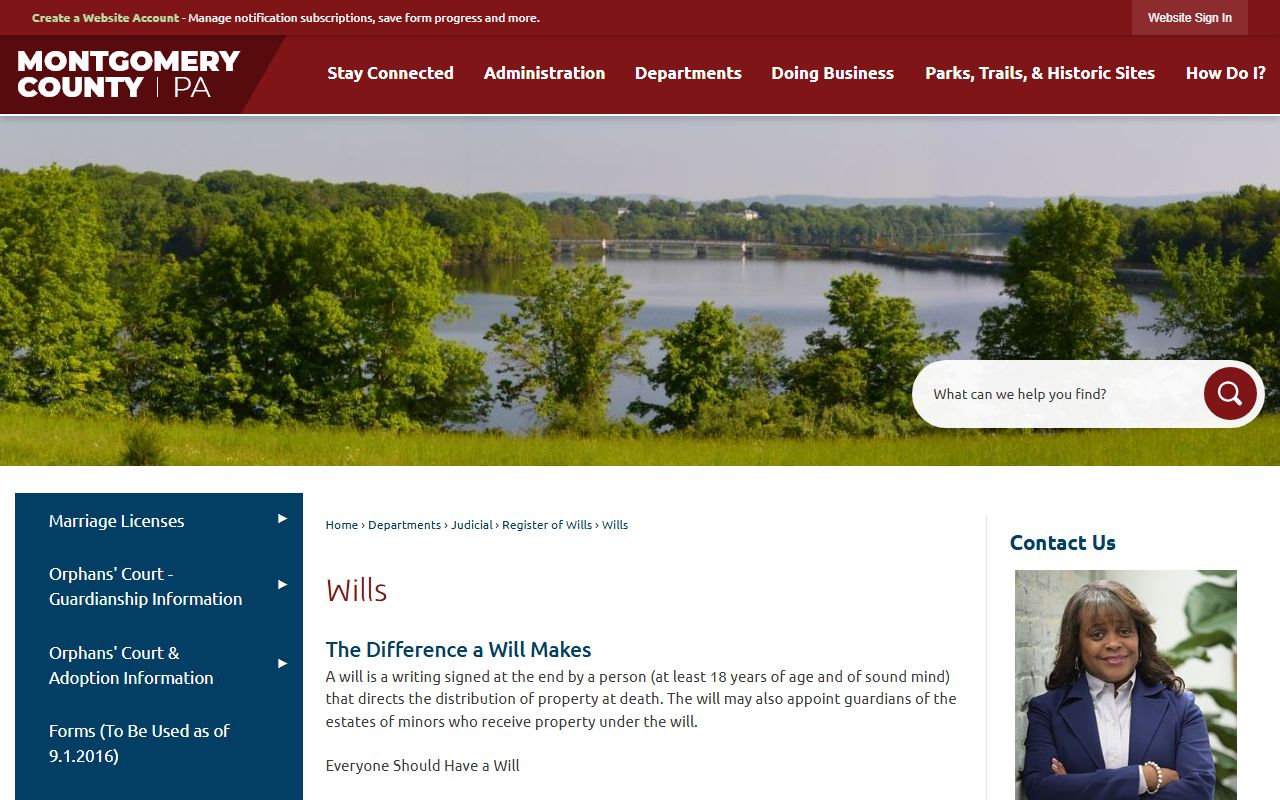
Probate starts with one question: did the person leave a will? The county explains that a will is a writing signed at the end by a person at least 18 years old and of sound mind, directing how property passes at death. If there is a valid will, the named executor opens the estate. If there is no will, the person died intestate, and Pennsylvania law decides who serves as administrator and how the estate is divided among heirs.
If heirs dispute who should serve as administrator, the Register conducts a hearing and resolves the dispute. This is one of the few times the Register acts in a judge-like role rather than as a filing office, and it shows why getting the paperwork right at the start matters. A clear, valid will usually avoids that hearing entirely.
A few terms come up throughout the process, and the short list below explains them in plain language.
- Testator
- A person who makes a will.
- Executor
- The person named in a will to settle the estate.
- Administrator
- The person appointed to settle an estate when there is no will.
- Intestate
- Dying without a valid will, so state law sets the heirs.
- Short certificate
- A Register of Wills paper proving authority to act for an estate.
The Montgomery County Probate Process
The early steps follow a fairly set order, whether or not there is a will. The walkthrough below sums up how an estate opens in the county.
- Find out whether the person left a valid will.
- Open the estate through online e-filing or an in-person probate.
- The Register grants letters to the executor or administrator.
- Obtain short certificates to act for the estate.
- File inheritance-tax returns and later estate accounts as required.
The office acts as the Commonwealth's agent for inheritance tax, so estate work and tax filing often move together. Initial probates may be filed online, and accounts by executors and administrators may be e-filed as well. The office encourages the online route but still accommodates walk-ins for those who need them, which helps people who are not comfortable filing on a computer.
Inheritance Tax and Estate Accounts
The Register of Wills does double duty as the Commonwealth's agent for inheritance tax. That means inheritance-tax returns for county estates are filed and paid through this office, not a separate tax bureau. The office reports that it collects more than $200 million in inheritance taxes a year, which shows how central this role is to county estate work.
Estate accounts are the other recurring filing. After an executor or administrator gathers assets, pays debts, and distributes the estate, the law may require an account that shows the court what was received and paid. The county allows these accounts to be e-filed, and it accepts Petitions for Adjudication of Account through the same system. Keeping clean records during the estate makes the account far easier to file at the end.
Short Certificates and Estate Authority
A short certificate is the document that proves an executor or administrator has authority to act. Banks, insurers, and transfer agents usually ask for one before they release a deceased person's assets. The Register of Wills issues these certificates as required by law, along with certified copies of wills.
Because so many institutions ask for a short certificate, most estates need several copies. Plan to request more than one when you open the estate, so you do not have to come back for each account or asset. The office can explain how many it recommends for a given estate.
A short certificate is also time-sensitive in practice. Some institutions want a recent one, issued within a set number of months, before they will act. If an estate drags on, an executor may need to request fresh certificates later. Asking the office about dating rules up front can save a second trip down the line.
Guardianship and Orphans' Court Forms
The Orphans' Court appoints guardians for the person and property of minors and incapacitated adults, and guardians must file regular reports. The county lists the state forms by name and links them from its guardianship page.
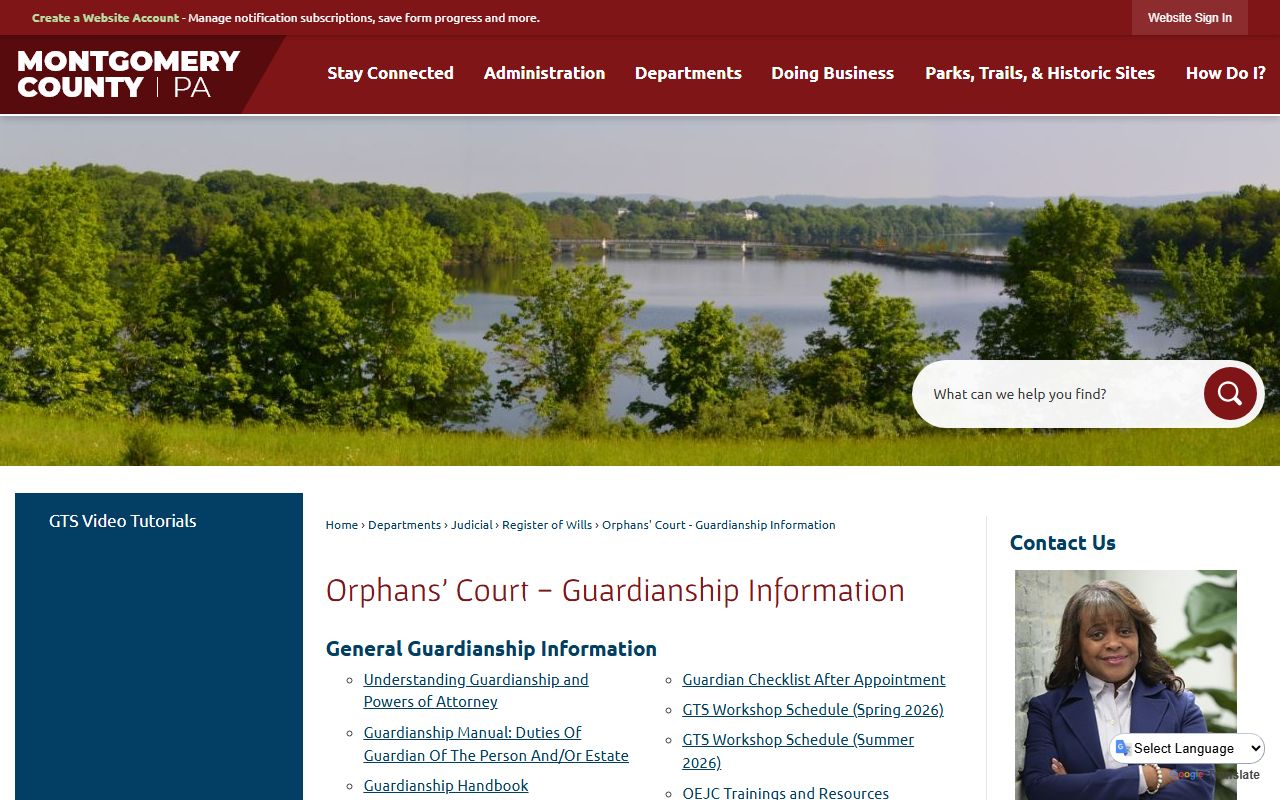
The main state guardianship forms include the Guardian of Incapacitated Person Inventory (G-05), the Guardian of the Person Report (G-03), the Guardian of the Estate Report (G-02), and the Notice of Filing (G-07), plus a Petition for Adjudication of Account. Guardianship questions go to the Clerk of Orphans' Court at 610-278-3400 or ROWSupport@montgomerycountypa.gov. Adoption petitions also run through the Orphans' Court, and adoption records are typically restricted under Pennsylvania law, so they are not open to general public search the way an estate docket is.
Montgomery County Probate Fees
The county publishes a Register of Wills fee schedule and an Orphans' Court fee schedule, and it updates them by ordinance. One published change is the Judicial Computer Project fee, which rose to $41.25 starting December 1, 2025. Because the full line-item probate schedule is set by the county and updated periodically, confirm the current amount for a specific filing or certificate before you pay.
| Item | Amount |
|---|---|
| Judicial Computer Project fee | $41.25 (from December 1, 2025) |
| Register of Wills fee schedule | Published by the county; confirm current amounts |
| Orphans' Court fee schedule | Published by the county; confirm current amounts |
Note: the office posts scheduled e-filing maintenance around fee-schedule updates, so check the Register of Wills page if e-filing is briefly unavailable near a change date.
Register of Wills and Orphans' Court Contact
The office sits at One Montgomery Plaza in Norristown, a block from the main courthouse. It keeps regular weekday hours and asks that probates and walk-ins arrive with time to spare, since it does not take new appointments or walk-ins after 3:30 p.m.
Register of Wills / Clerk of Orphans' Court
One Montgomery Plaza, 425 Swede Street, 4th Floor
Norristown, PA 19401
610-278-3400
Mon-Fri 8:30 a.m.-4:15 p.m.
Mail goes to P.O. Box 311, Norristown, PA 19404-0311. For initial online probate, use the office's e-filing system linked from its page.